EOS Aluminium AlSi10Mg for EOS M 400-4 | 40 µm
EOS M 400-4 - 40 µm - TRL 5
Process Information Metal
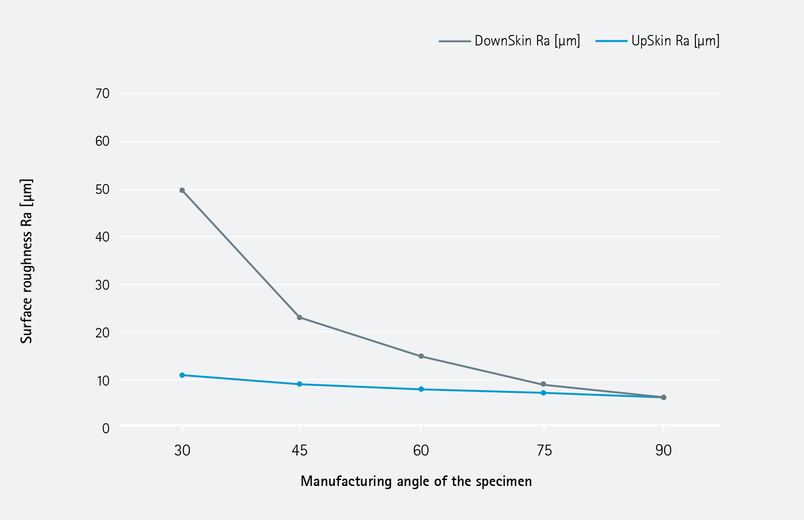
High performance process with optimized quality and productivity. Good buildability with low surface
roughness. EOS T6 heat treatment is recommended for parts where higher elongation properties are required.
Main Characteristics:
→ High performance AlSi10Mg process for EOS M 400-4
→ Optimized combination of mechanical properties and productivity
→ Two-sided recoating reduces building time
| System Setup | EOS M 400-4 |
|---|---|
| EOS Material set | AlSi10MgAr_040_CoreM404 |
| Powder Product No. | 9011-0024 |
| Software Requirements |
EOSPRINT 2.7 or newer |
| Recoater Blade | HSS (High Speed Steel) |
| Build Platform Temperature | 35 °C |
| Nozzle | Standard |
| Inert gas | Argon |
| Sieve | 90 µm |
| Additional Information | |
|---|---|
| Layer Thickness | 40 µm |
| Volume Rate | up to 4 x 7 mm³/s |
| Min. Wall Thickness | 0.3 mm |
Chemical and Physical Properties of Parts
The chemical composition of the EOS Aluminium AlSi10Mg parts is in compliance with the DIN EN 1706 (EN AC—43000) standard.
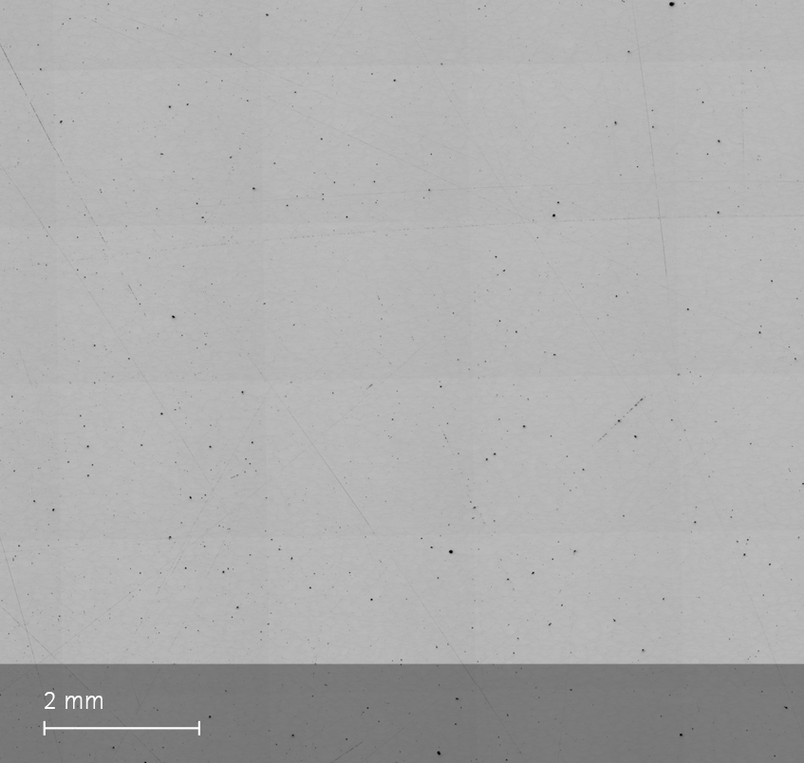
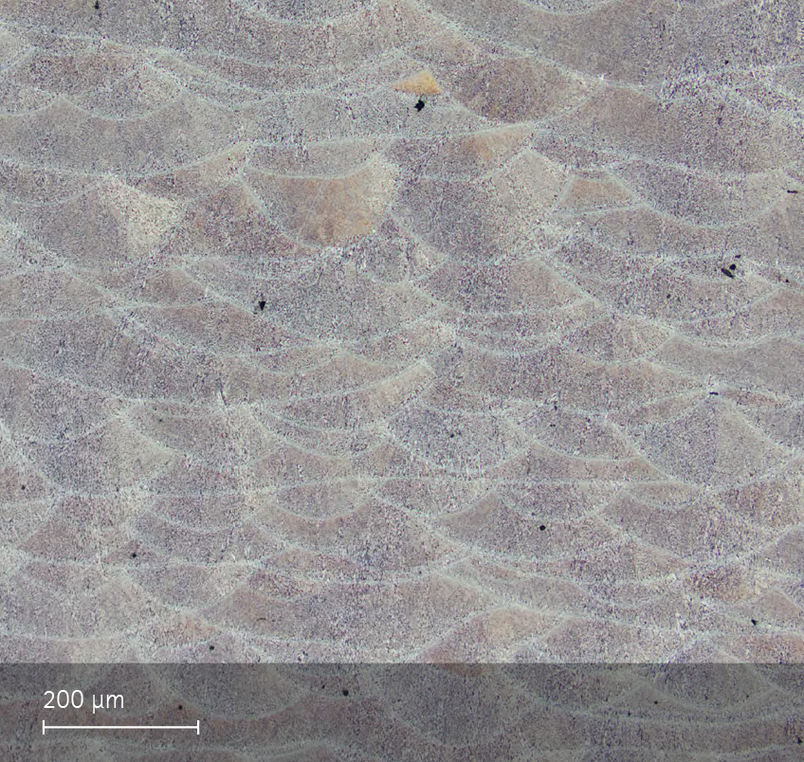
Microstructure of the Produced Parts
| Defects | Thickness | Result | Number of Samples |
|---|---|---|---|
| Average Defect Percentage | 40 µm | < 0.1 % | - |
| Density EN ISO 3369 | Thickness | Result | Number of Samples |
|---|---|---|---|
| Average Density | 40 µm | ≥ 2.67 g/cm³ | - |
Mechanical Properties
Mechanical Properties Heat Treated
| EN ISO 6892-1 Room Temperature | 40 µm | Yield Strength [MPa] | Tensile Strength [MPa] | Elongation at Break A [%] | Reduction of Area Z [%] | Modulus of elasticity [GPa] | Number of Samples |
|---|---|---|---|---|---|---|
| Vertical | 230 | 300 | 10 | - | - | - |
| Horizontal | 250 | 310 | 10 | - | - | - |
EOS T6 Heat Treatment
EOS has developed an AM optimized heat treatment procedure that is 40 % shorter than conventional T6 heat treatment procedures.
Solution annealing 30 min @ 530 °C, water quench. Artificial aging 6 h @ 165 °C, cooling in air. Parts to preheated oven. Maximum overheating 5 °C. Delay between SA and quenching maximum 30 s. Oven type & configuration may have impact on the mechanical properties. For complex and massive parts uniform heating and cooling needs to be arranged.
EOS T6 treatment is recommended to obtain controlled mechanical properties and lower variation in mechanical values (for example in long build jobs if heat transfer from parts is limited by low amount of support and after stress relief heat treatment).
An increase in porosity due to heat treatment is possible. A more detailed description of heat treatment is available upon request.
Solution Annealing:
30 minutes in 530 °C followed by immediate quenching to water.
Aging:
Artificial aging of 6 hours in 165 °C followed by cooling in air.
In case higher build platform temperature is used it is strongly advised to perform EOS T6 heat treatment in order to obtain mechanical properties similar to those stated in the MDS.
In case stress relieving of parts is needed prior to removal from build platform, EOS recommends Stress Relief HT:
90 minutes @ 270 °C.
Typical properties obtained after SR: YS 200MPa; TS 310MPa; elongation 9%.
Mechanical Properties As Manufactured
| EN ISO 6892-1 Room Temperature | 40 µm | Yield Strength [MPa] | Tensile Strength [MPa] | Elongation at Break A [%] | Reduction of Area Z [%] | Modulus of elasticity [GPa] | Number of Samples |
|---|---|---|---|---|---|---|
| Vertical | 230 | 450 | 5 | - | - | - |
| Horizontal | 250 | 440 | 8 | - | - | - |
Fatigue
| As Manufactured | |
|---|---|
| Fatigue strength [MPa] | 110 |
Method: HCF, ASTM E466-15, 10 million cycles, fully reversed
Aluminum alloys do not have fatigue limit. Actual fatigue values depend on sample geometry and specially surface finish. EOS uses machined (turned) samples in determining material properties. Typically EOS T6 heat treatment does not have significant effect on fatigue strength.
Surface Roughness
| Surface Roughness | From | To |
|---|---|---|
| Sa (µm) | - | - |
| Ra (µm) | - | - |