Smart Fusion Redefines Heat Management in Metal Additive Manufacturing
September 9, 2025 | Reading time: 6 min
In metal additive manufacturing, managing heat isn’t just a technical detail - it’s a defining factor that shapes part quality, process stability, and economic efficiency. Across the industry, one of the persistent challenges has been how to control heat in real time to prevent common issues like distortion, material inconsistencies, or support-related inefficiencies.
Smart Fusion technology, developed and deployed by EOS, addresses this challenge head-on. Through a combination of optical tomography and intelligent laser control, Smart Fusion enables a new level of precision and repeatability in powder bed fusion processes. A recent Expert Talk Series, led by EOS specialists and partners, shed light on how this technology is redefining industrial 3D printing - from part qualification to sustainability.
Real-Time Control Over Heat: Why It Matters
Overheating in metal 3D printing often stems from process conditions like short vectors, flat overhangs, heat accumulating geometric features or increasing part height at short layer times. These thermal inconsistencies can lead to internal stresses, poor surface finishes, and dimensional inaccuracies - especially in parts with complex geometries.
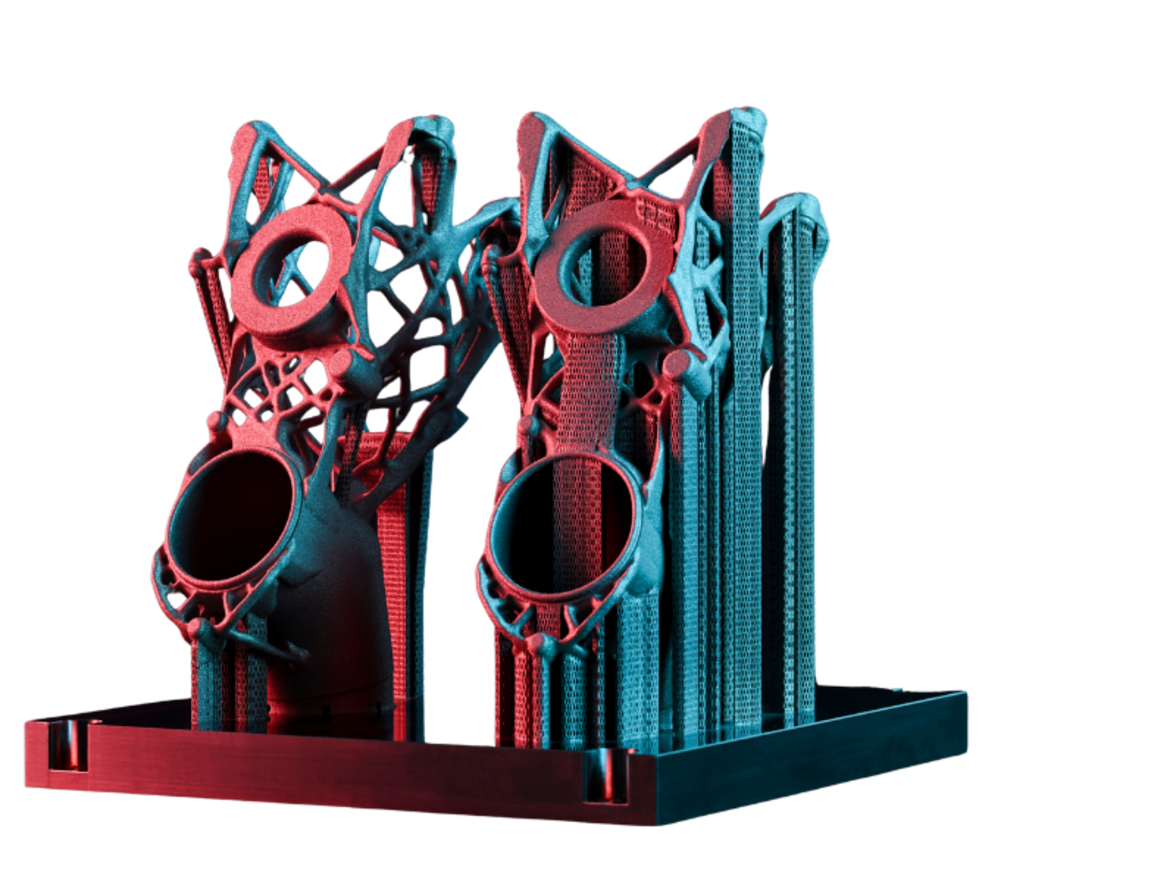
Smart Fusion counters this by constantly monitoring thermal radiation during the build, creating a live process heat map. Instead of waiting for post-build inspection data, the system enables on-the-fly laser power adjustments, ensuring consistent heat distribution and minimizing the risk of local hotspots. The result? Greater stability, improved material properties, and fewer build failures.
Printing Without Supports And Without Compromising Quality
One of the most transformative aspects of Smart Fusion is its impact on support structure reduction. Traditionally, supports are essential for anchoring overhangs and managing heat, but they come at a cost: more material, longer build times, additional post-processing, and design limitations.
By enhancing thermal control during the build, Smart Fusion allows many parts to be printed without supports - even in high-performance materials like titanium or Inconel. In real-world case studies, this has led to measurable improvements in dimensional accuracy, surface finish, and build efficiency, particularly for applications in aerospace and energy.
From Lab to Factory Floor: Qualification, Replay, and Consistency
For industries with stringent validation requirements - like medical and aerospace - reproducibility is just as important as innovation. Smart Fusion includes a replay function, allowing previously successful print jobs to be re-run with virtually identical thermal conditions. This not only streamlines qualification processes but also increases trust in additive workflows for critical parts.
The system’s ability to freeze process parameters and maintain thermal consistency between jobs is particularly valuable when scaling production or meeting regulatory compliance. Parts produced using the Smart Fusion replay mode often matched or exceeded the quality of the original prints.
Microstructure Matters
Beyond geometry and surface quality, Smart Fusion has a measurable impact at the microstructural level. By controlling cooling rates in real time, it enables more homogeneous microstructures in materials like AlSi10Mg and MS1. By preventing overheating, undesirable changes in microstructure can be avoided through the use of Smart Fusion. This means more consistent mechanical properties and better part performance.
A Future Built on Process Intelligence
EOS’s vision for Smart Fusion doesn’t stop at heat maps and camera systems. The technology is already evolving to include AI-based algorithms, adaptive process learning, and cross-material integration. Early customer feedback has shown reduced costs, shorter lead times, and lower environmental impact - signaling that Smart Fusion isn’t just a monitoring tool, but a strategic advantage.
From research labs to production lines, Smart Fusion is helping to close the gap between design ambition and manufacturing reality. It offers a pathway toward smarter, more sustainable additive manufacturing - where thermal control becomes a foundation, not a limitation.
EOS Software
EOS Software is the Digital Backbone of Industrial Additive Manufacturing
Designed to prepare, optimize, control, and monitor the entire additive manufacturing (AM) process, EOS Software connects machines, materials, data, and people across your production environment.
EOS Smart Monitoring
Real-time in-situ monitoring and process assurance for industrial metal additive manufacturing.
Using optical tomography and automated process control, EOS Smart Monitoring supports quality assurance during production, reduces build failures and inspection effort, and enables data-driven, closed-loop additive manufacturing.
Smart Fusion
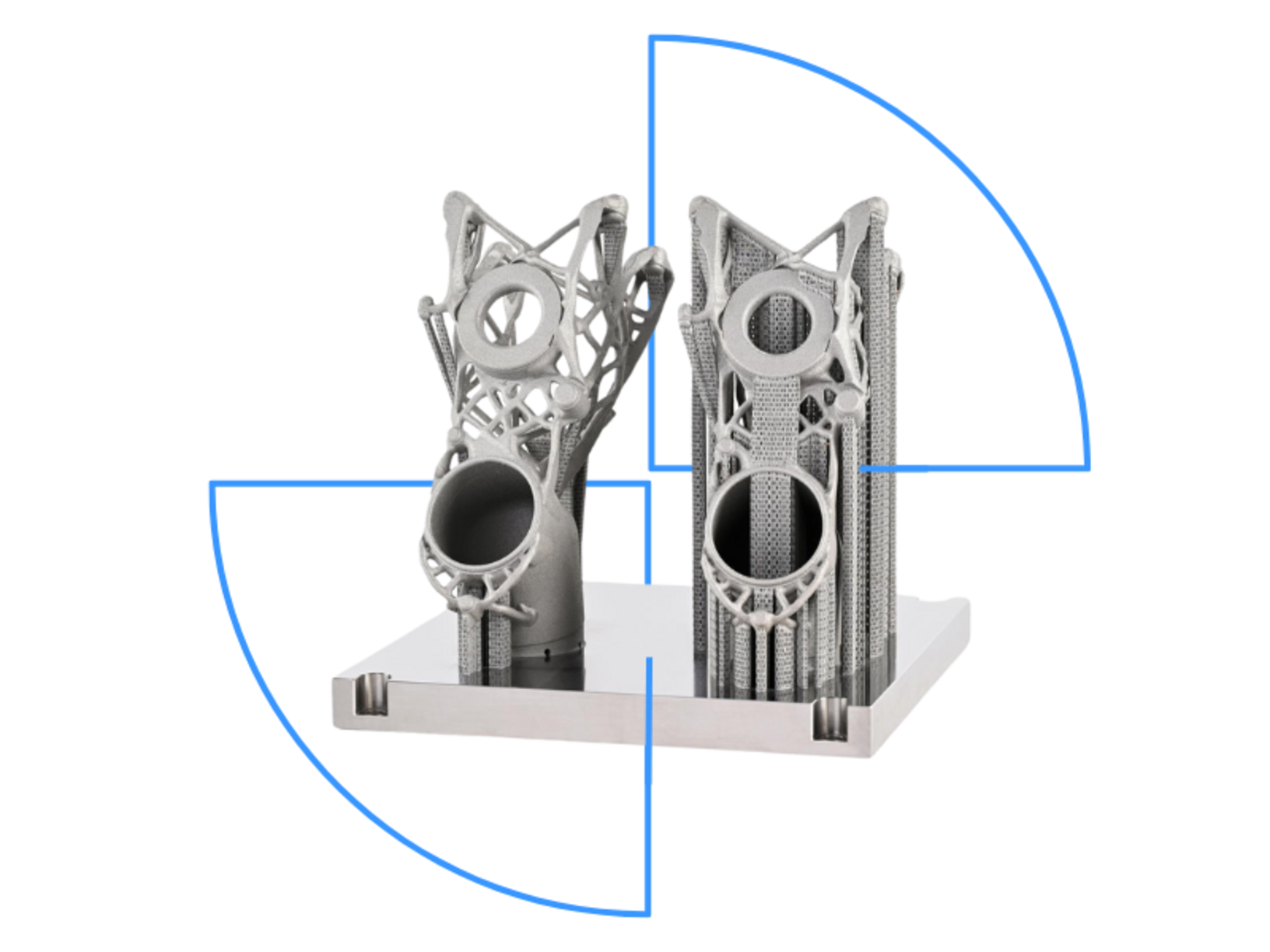
EOS Smart Fusion is EOS’s closed-loop process control innovation for metal additive manufacturing.
It actively manages thermal conditions during the build process to reduce support structures, improve part quality, and increase productivity.

