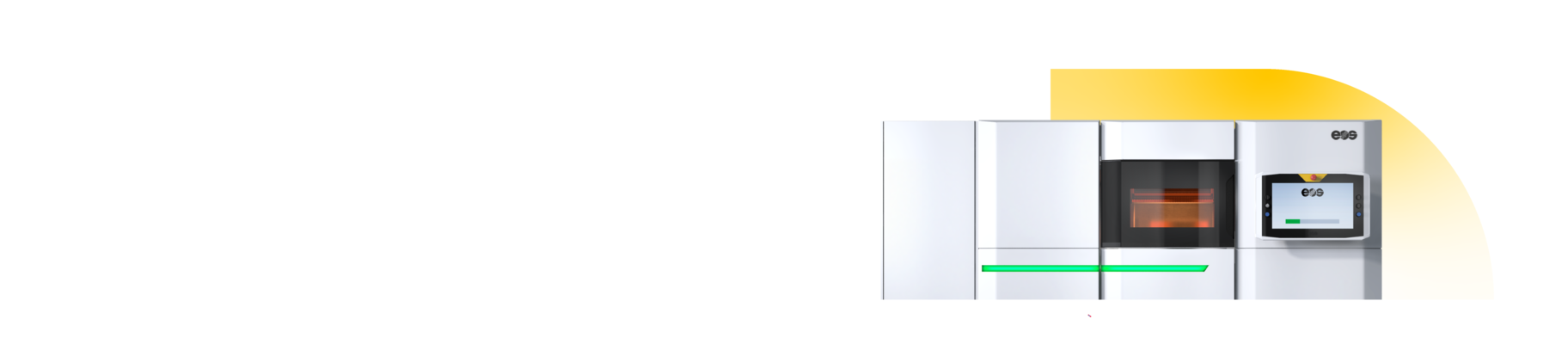
SLS 3D Printer Solutions: Advanced Selective Laser Sintering for Reliable Industrial Production
Fast, Reliable, and Highly Efficient
The manufacturing landscape is shifting toward agile, digital solutions that prioritize both speed and precision. An SLS 3D printer offers a robust pathway for businesses to transition from traditional prototyping to full-scale industrial production.
By utilizing Selective Laser Sintering (SLS) technology, organizations can produce high-quality, functional parts with complex geometries that were previously impossible to manufacture. This technology ensures consistent material properties and exceptional durability across various applications.
As industries demand higher throughput and reduced lead times, EOS provides the advanced hardware and integrated software necessary to maintain a competitive advantage in a global market.
What Is SLS 3D Printing and Where Does It Shine?
SLS stands as a cornerstone of additive manufacturing, offering a versatile approach to creating end-use components and intricate models without the constraints of conventional machining.
Core Definition of SLS Technology
SLS technology functions by using a high-powered laser to selectively fuse small particles of polymer powder. The process occurs layer by layer, where a recoater spreads a thin film of powder across the build platform before the laser traces the specific cross-section of the part to melt the material together.
A significant advantage of this method is the elimination of support structures. The unfused powder surrounding the part acts as a natural scaffold during the printing process. This self-supporting environment enables the creation of complex geometries, such as internal channels and lightweight cellular structures, which are often difficult or impossible to achieve using traditional manufacturing methods.
Why SLS for Industrial Environments?
Industrial environments favor SLS because it provides an excellent balance of mechanical performance, surface quality, and throughput. It is a proven, repeatable process designed for both serial production and functional prototyping.
By delivering parts that are nearly isotropic, the technology ensures that components can withstand the rigorous stresses of real-world application.
Industrial Use Cases and Applications
From the flight deck to the hospital floor, SLS 3D printing provides the flexibility required for specialized industrial demands. Here’s how:
- Production Parts
This technology supports small to mid-series production runs of end-use parts. It’s used to create lightweight, durable components for industries like automotive, aerospace, medical devices, and consumer goods. - Tooling, Jigs, and Fixtures
Companies utilize SLS for custom jigs, assembly aids, and thermoforming tools. It allows for the rapid, cost-effective replacement and iteration of items versus machined tooling. - Spare Parts and On-demand Manufacturing
SLS enables a digital inventory for spare parts, low-volume components, and legacy items. This capability reduces lead times and significantly lowers warehousing needs. - Functional Prototyping
Engineers produce prototypes with material properties and tolerances close to final production parts. This facilitates accurate design validation, fit testing, and iterative development.
Consumer-Grade vs Professional SLS Printers
While entry-level systems have made the technology more accessible, there remain distinct differences in capability between hobbyist tools and industrial-grade solutions:
Consumer or Entry-level SLS
- Features smaller build volumes, limited material portfolios, and reduced process controls.
- Suitable for hobby use, basic prototyping, and non-critical parts.
- Offers less focus on uptime, traceability, and integration with MES or ERP systems.
Professional / Industrial SLS (EOS)
- Provides larger build volumes and higher throughput for serial production.
- Utilizes validated material sets, optimized process parameters, and repeatable part quality.
- Includes integration options for IIoT through EOSCONNECT, quality monitoring, and factory automation.
- Designed for 24/7 operation, predictive maintenance, and consistent part properties across the entire build.
Find the Right SLS 3D Printer for Your Needs
Different applications and production environments call for different build volumes, materials, and automation levels. That’s why EOS is proud to offer a complete portfolio — from compact systems to fully automated production cells.
Comparison Overview
While industrial 3D printing promises more flexibility and creative freedom than traditional manufacturing, understanding different materials and technologies can be a challenge. SLS, the technology perfected by EOS, uses plastic polymers in powder form that are fused using a precise laser. The result is robust functional parts with high design freedom, as no support structures are required.
Here’s your easy path into the limitless world of polymer 3D printing:
| Number & Laser Type |
| Build Volume (mm) |
| Machine Dimensions (mm) |
| Weight (kg) |

| 1x CO₂ |
| 200 x 250 x 330 |
| 1320 x 1067 x 2204 |
| 610 |
| 1x CO₂ |
| 340 x 340 x 600 |
| 2030 x 1270 x 2400 |
| 1400 |

| 1x CO₂ |
| 420 x 420 x 500 |
| 2080 x 1320 x 2460 |
| 1815 |
| 2x CO₂ - 2x CO |
| 500 x 330 x 400 |
| 3400 x 2100 x 2100 |
| 7000 |
| 2x CO₂ |
| 700 x 380 x 580 |
| 2250 x 1550 x 2100 |
| 2300 |
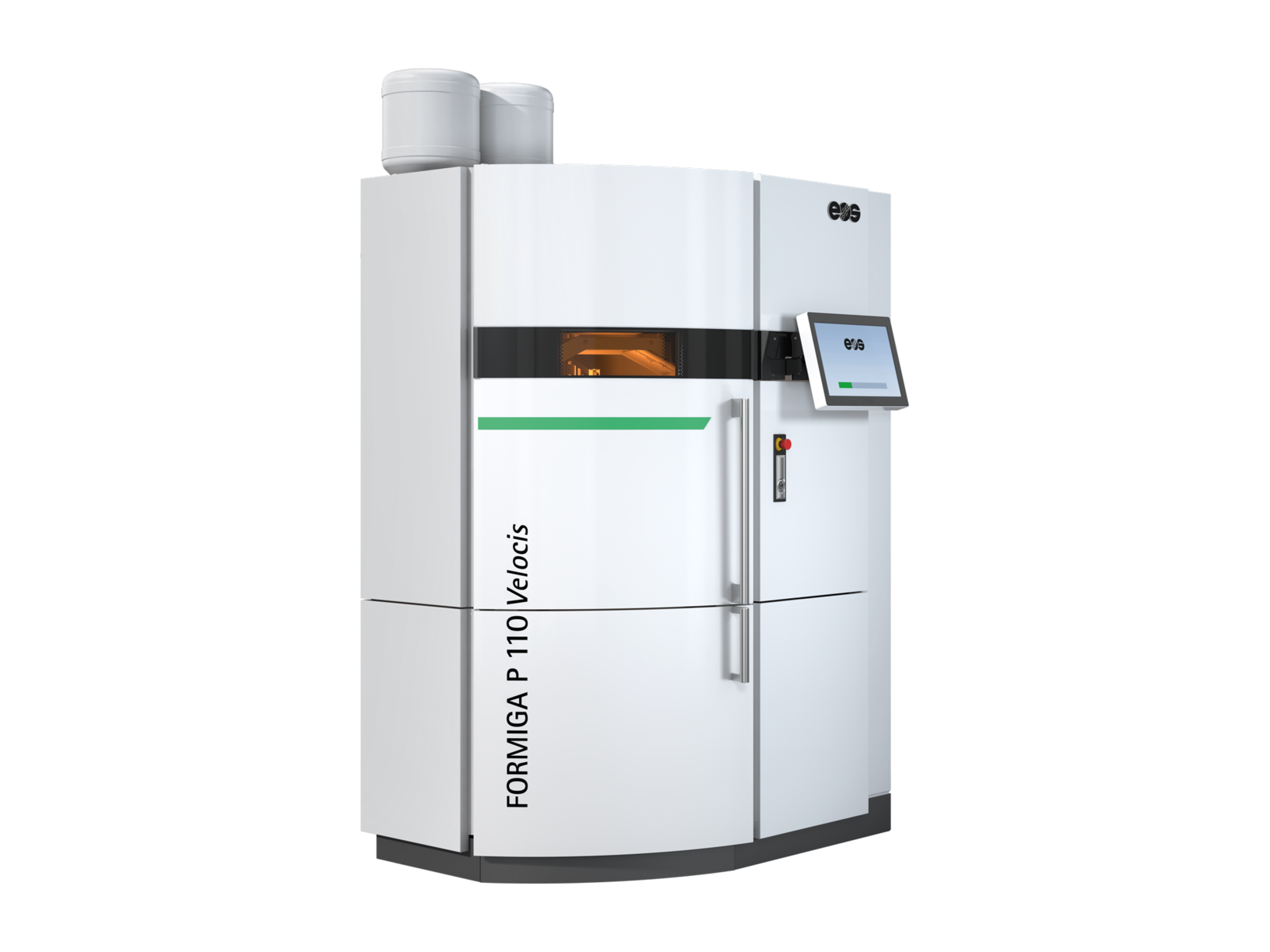
FORMIGA P 110 Series
With a small footprint and build volume, the FORMIGA P 110 Series stands out as a compact and efficient solution for industrial polymer 3D printing. It not only offers excellent part quality but also consumes minimal floor space. This makes it an ideal choice for businesses seeking space-efficient 3D printing technology to achieve repeatable results across machines.
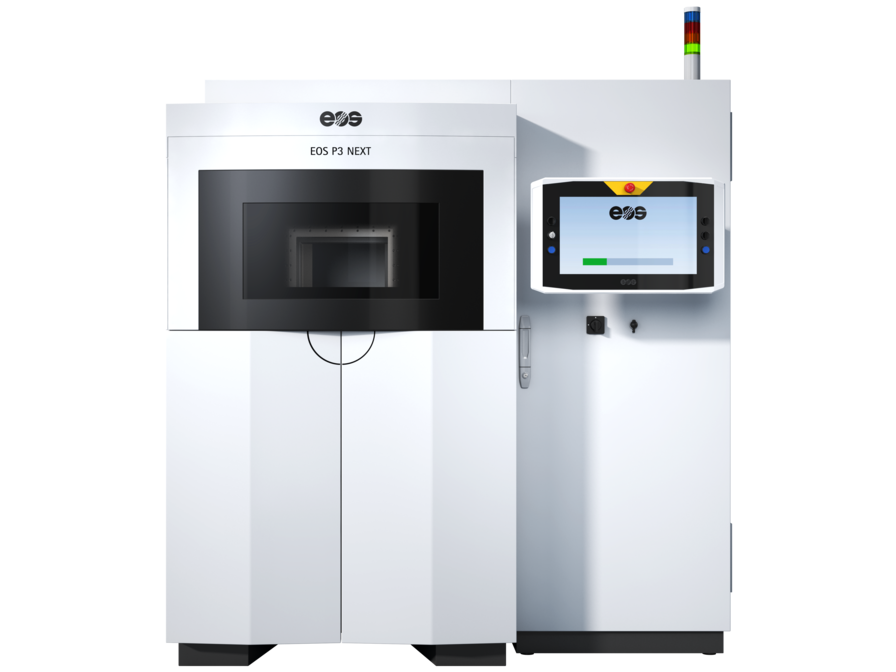
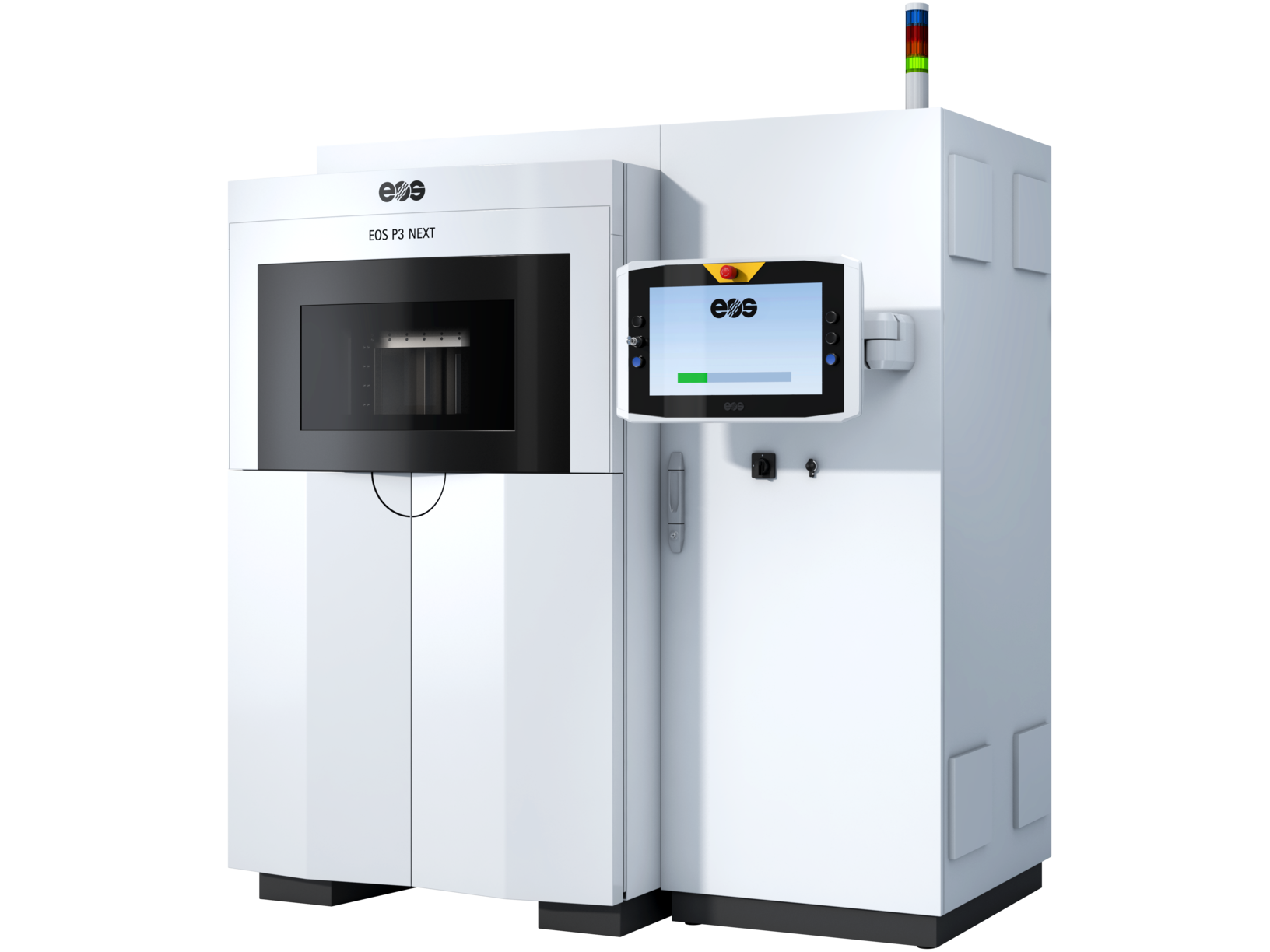
EOS P3 NEXT
The EOS P3 NEXT is a mid-sized 3D printer for a wide range of industrial applications, promising incredibly homogeneous mechanical properties throughout the entire build volume. This highly productive and reliable system can easily be integrated into IIoT environments through EOSCONNECT Core. That way, you’ll enjoy a fully digital 3D printing process from the CAD model all the way to functional parts.
INTEGRA P 450
This additive manufacturing system empowers designers, production engineers, and material makers alike with an impressive array of new user-friendly features. Its unprecedented material processing at up to 300° C allows for 3D printing application scenarios using polymer materials that previously weren’t available for certain designs.
Thanks to the integration of 8-zone quartz heating and a thermal imaging camera in the build platform, you can benefit from consistent quality control and data capture across your production line. The modular, future-proof design, combined with EOSPRINT 2, extends the 3D printer’s lifecycle and sets you up for using high-performance polymers in an industry 4.0 setting.
Please note: This system is available only to customers in North America.

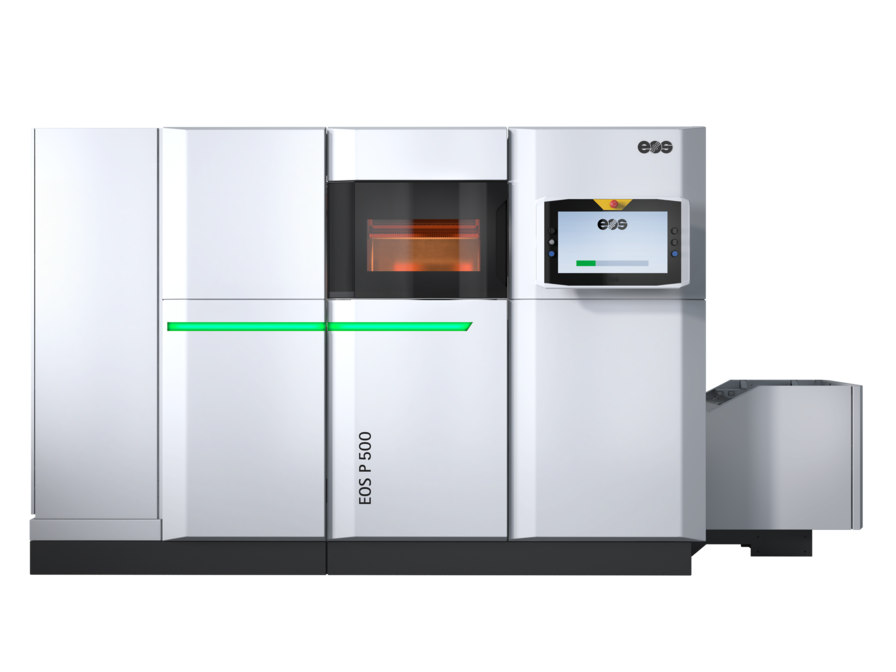
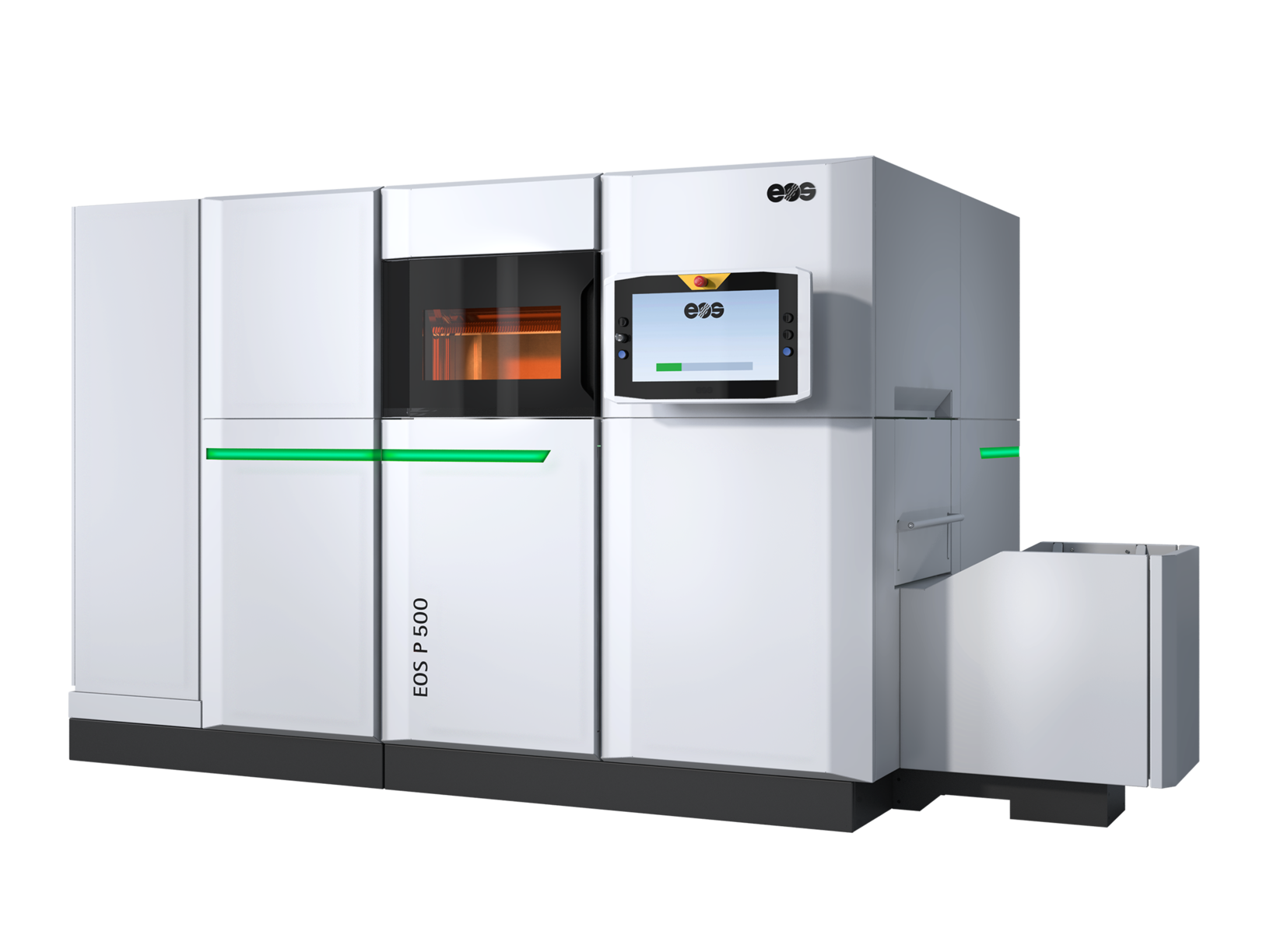
EOS P 500 Series
With the lowest costs per part and automation-friendly software and hardware, the EOS P 500 offers the latest generation of industrial 3D printing. A system availability of 92% and homogeneous part properties for every build allow you to reliably process plastic on an industrial scale. Accessories for optimized part and material flow, as well as automated interfaces, increase operating time by at least 25% compared to conventional 3D systems on the market.
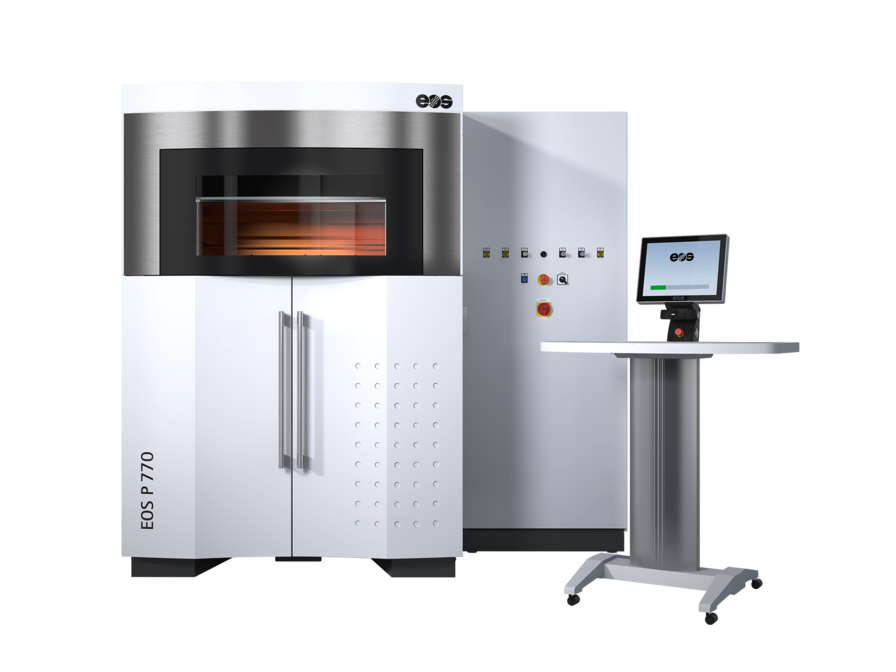
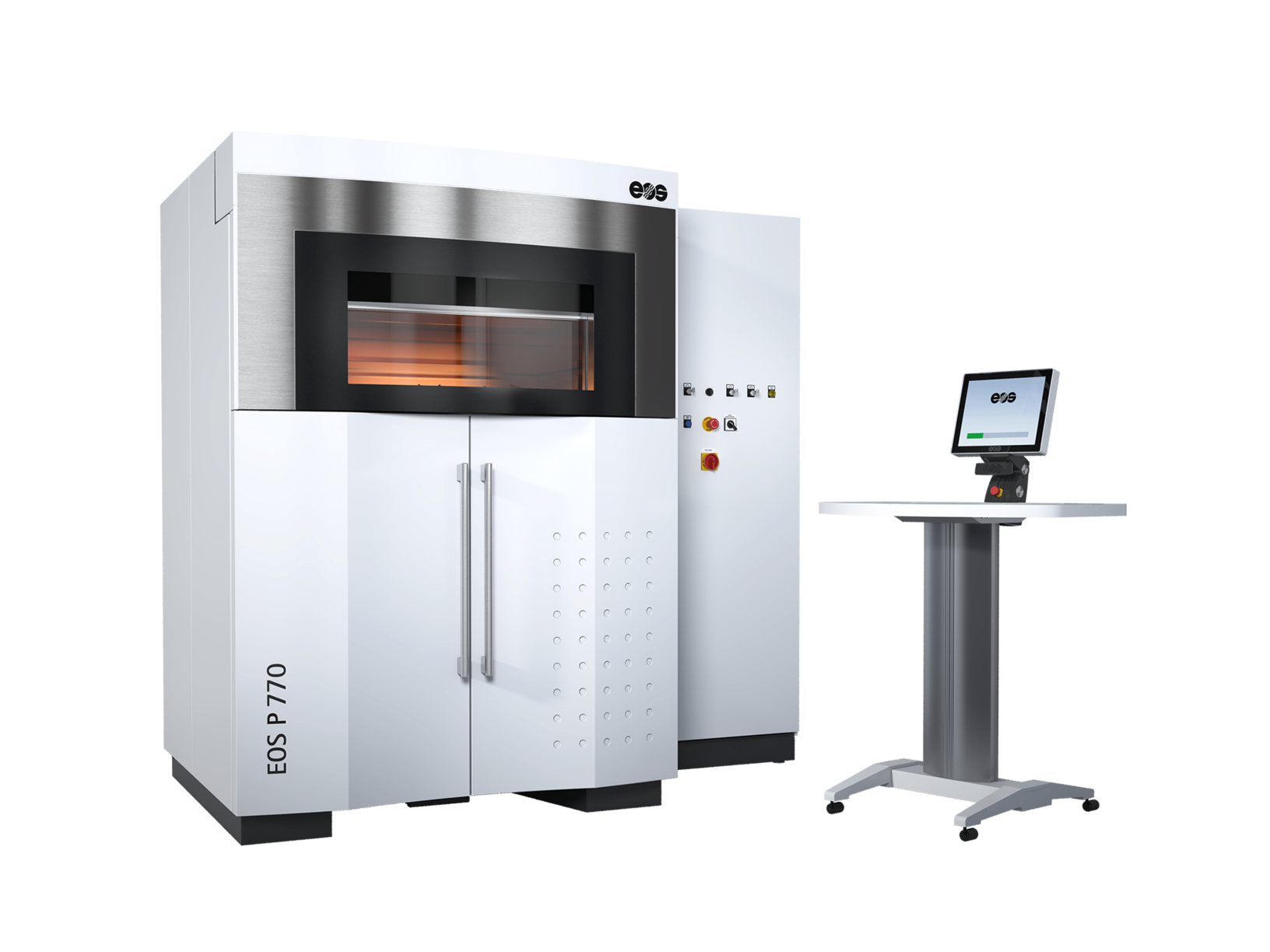
EOS P 770
3D printing of large parts and with high-throughput
As the SLS printer with the largest build area on the market (150 liters), the EOS P 770 is perfectly suited for additive manufacturing of large parts with high throughput. Benefit from reduced build time and cost per part due to optimized temperature management, enhanced layering speed, and powerful lasers.
The energy input is effectively homogenized by the EOSAME feature, resulting in consistent mechanical properties and dimensional accuracy across the entire build volume. Notably, the lasers’ overlapping zones make for a seamless production without any discernible edges.
Next Steps to Your Additive Manufacturing Solution
Not sure which system fits your applications, throughput targets, and material requirements? Selecting the ideal SLS 3D printer involves evaluating specific production goals, material durability, and the desired level of automation.
Whether the objective is to produce intricate medical devices or large-scale aerospace components, the right technology partner makes the difference. EOS provides comprehensive support to help organizations navigate these choices, ensuring that every investment aligns with long-term manufacturing strategies.
By integrating advanced hardware with intelligent software, companies can achieve a seamless transition to digital production and realize the full potential of additive manufacturing.

