
From Performance to Supply Chain Resilience: Engineering the Next Era of Semiconductor Manufacturing
27 APRIL, 2026 | Reading time: 5 min
Semiconductor manufacturers today face a dual challenge:
Pushing the boundaries of performance while safeguarding operations against supply chain disruptions. As next-generation chips push power density limits, thermal management and precision engineering have become defining success factors rather than supporting considerations.
At the same time, supply chain fragility - driven by global concentration, long lead times and single-source dependencies - poses significant risks to scalability and resilience. To remain competitive, the industry must adopt approaches that deliver both engineering excellence and supply chain agility.
EOS is driving this transformation: helping semiconductor companies achieve breakthrough performance, reduce total cost of ownership and build resilient, future‑ready supply chains.
A Shift in Semiconductor Priorities
The semiconductor industry is entering a new phase. Rising chip complexity, escalating power densities and increasing system-level requirements are forcing a fundamental change in how equipment is designed and manufactured. Performance alone is no longer enough, without solving the constraints that accompany it.
In this environment, innovation has become the primary competitive differentiator for equipment companies. Their ability to enable precision, maximize yield and accelerate time‑to‑market directly determines customer success and long-term market leadership.
At the same time, the industry is reaching a critical inflection point. Performance is no longer limited by transistor scaling alone; it is increasingly constrained by thermal behavior and process complexity driven by AI, high‑performance computing and advanced packaging.
Back-end testing now demands rapid iteration, advanced thermal control and increasingly customized test handler solutions. As a result, thermal management has shifted from a supporting function to a core engineering discipline, one that directly defines the boundaries of what next‑generation semiconductor technologies can achieve.
Concurrently, the semiconductor supply chain has become one of the most advanced and most fragile industrial ecosystems in the world. Deep specialization, geographic concentration and highly interdependent supplier networks expose the industry to significant geopolitical and logistical risks. Long lead times - often stretching several months - limit the ability to respond to demand surges.
Even minor disruptions can lead to severe financial impact due to the high cost of tool downtime. This creates a structural tension between efficiency and resilience: lean supply chains reduce cost but increase vulnerability, while inventory buffers add cost and obsolescence risk.
“Over the past 20 years, chip production has evolved from efficiency-driven scaling to managing increasing complexity. Today, the limits are no longer defined solely by how small and fast we can build, but equally by how effectively we develop new materials, manage power efficiency, heat transfer and global dependencies. Supply chain resilience is no longer an operational concern, but a strategic priority.”
Ho Kei Leong
Rethinking Performance Through Design Freedom
Semiconductor equipment performance depends on precision engineering - especially in wafer handling, thermal management, flow dynamics, part lifetime and overall system reliability. Yet traditional manufacturing often limits what engineers can design.
Additive manufacturing removes these constraints. By enabling conformal cooling channels, complex internal geometries, rigid lightweighting and part consolidation, AM allows engineers to design for function, not manufacturability.

Improved wafer temperature uniformity and yield

Optimized gas and fluid flow for stable plasma processes
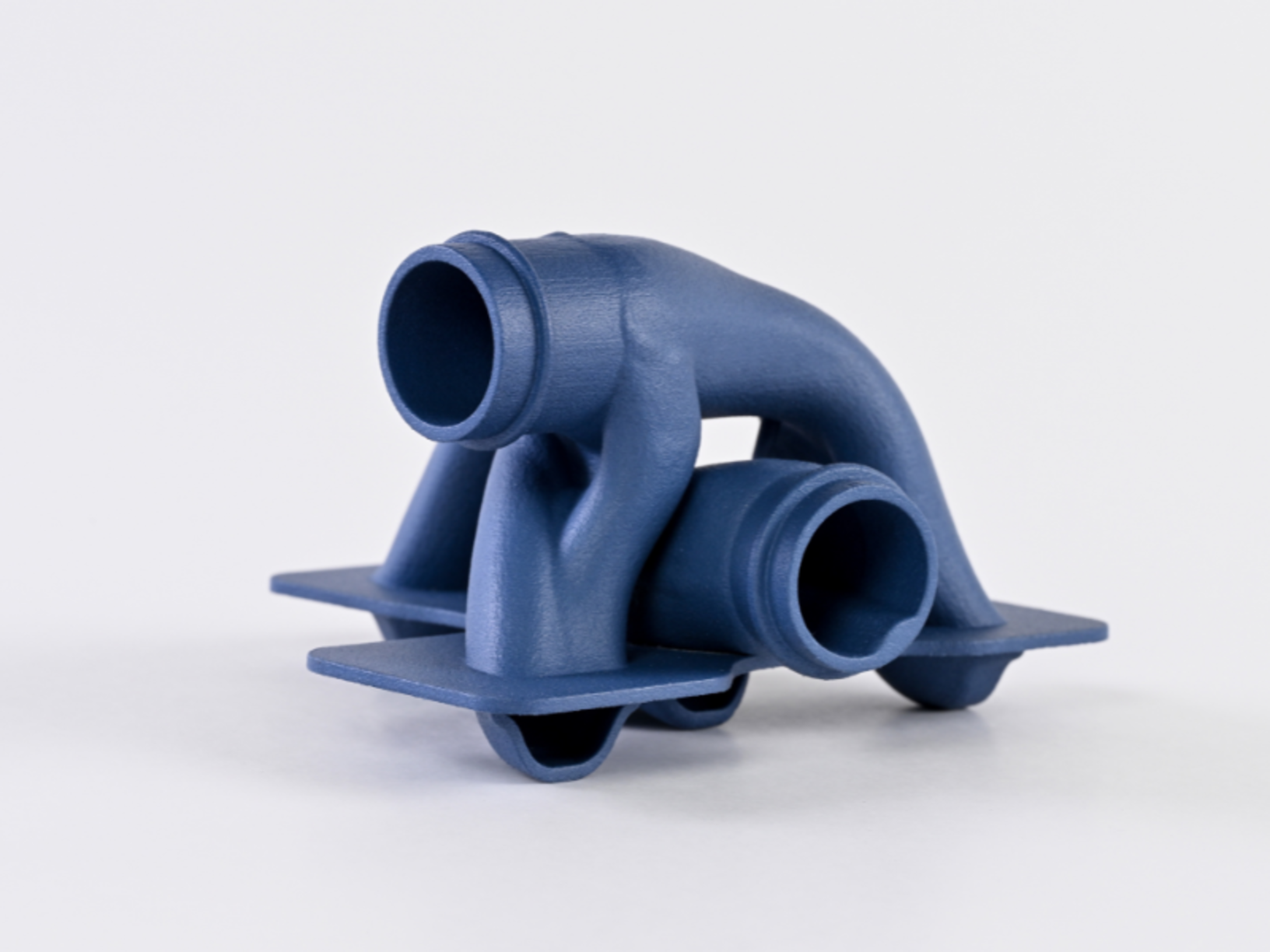
Lightweight, integrated components with fewer failure points
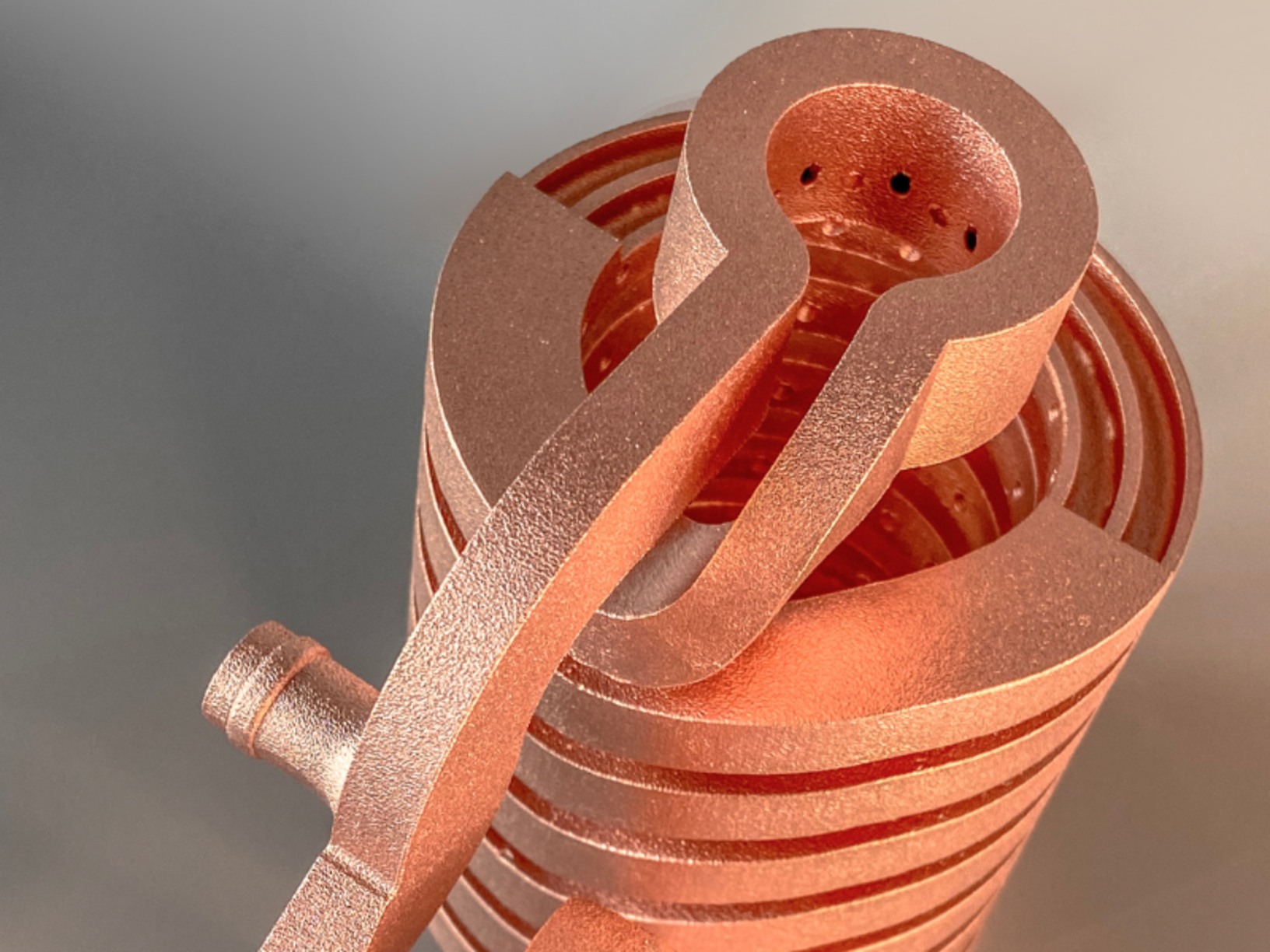
Enhanced component lifespan through optimized design and manufacturing
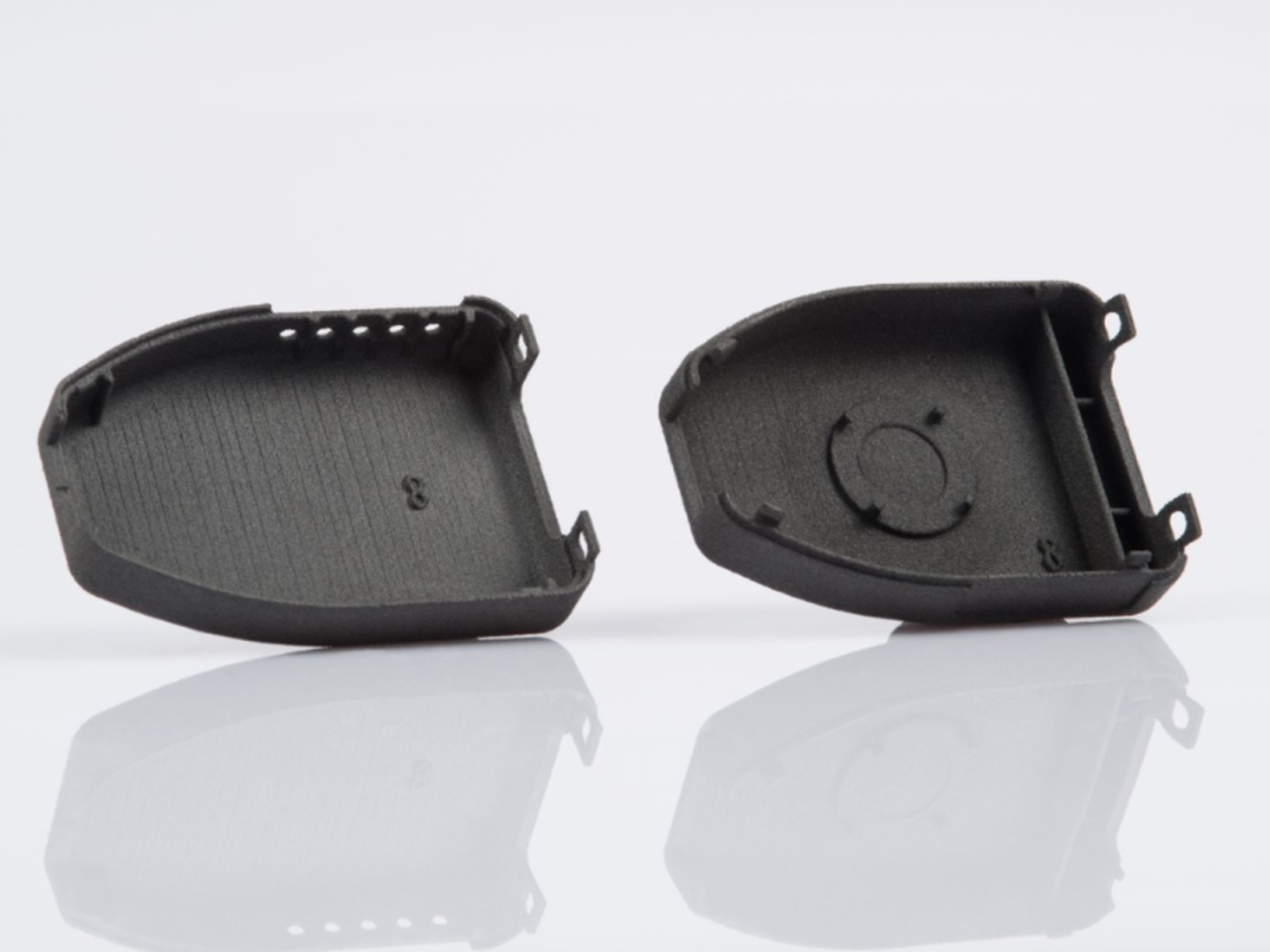
Faster design iterations and reduced development cycles
Built for Supply Chain Resilience
In an increasingly volatile global environment, additive manufacturing enables a strategic shift toward digital, distributed and on-demand production:
- Localized manufacturing closer to wafer fabs and end‑users
- Digital inventory replacing physical stock
- Reduced supplier dependency through part consolidation
- Shorter lead times for critical components
- Rapid response capability to mitigate disruptions
This transforms traditional supply chains into flexible, responsive ecosystems - critical for maintaining uptime and minimizing operational risk.
Case Study
Cooling Chuck Optimization for Wafer Processing
To demonstrate the impact of advanced thermal management, EOS partnered with a leading semiconductor equipment manufacturer to redesign a critical cooling chuck using additive manufacturing.
Business Challenge
With rising thermal loads and tighter temperature uniformity requirements - driven by shrinking technology nodes and increasing packing density - the conventional design had reached its limits.
Solution
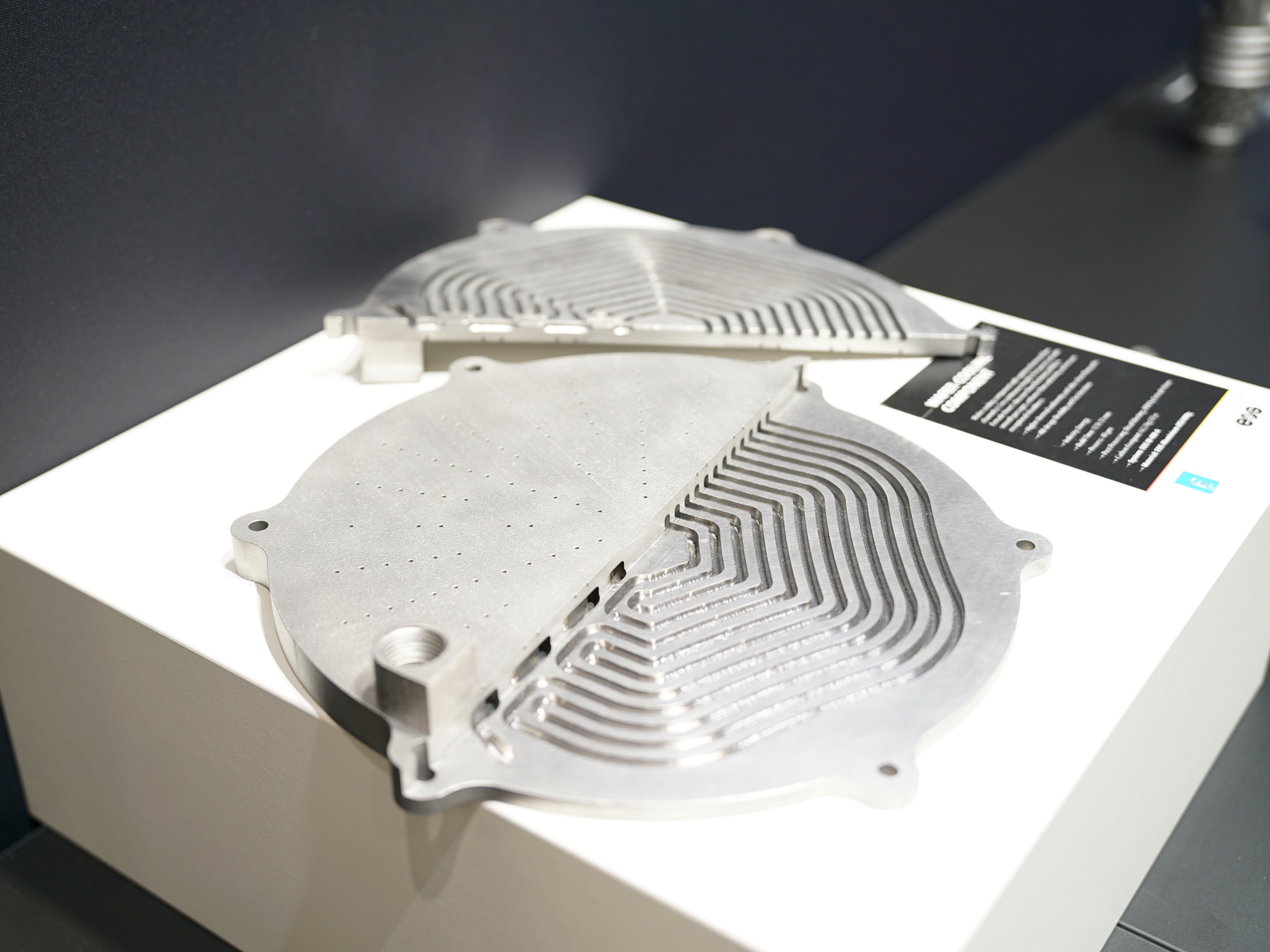
Leveraging design for additive manufacturing, the team developed an optimized chuck featuring conformal cooling channels and enhanced heat‑transfer characteristics.
- +60% improvement in temperature uniformity
- –30% peak surface temperature
- >50% increase in cooling surface area
- Reduced leakage risk through integrated single-part design
Beyond performance, the redesign reduced manufacturing complexity and improved overall system reliability - demonstrating the dual engineering and operational value of AM.
From Innovation to Industrialization
EOS provides a complete ecosystem to support adoption at scale, including industrial AM systems, advanced materials, intelligent software, on‑demand digital learning content and Additive Minds consulting. With a structured Evaluate – Develop – Establish approach, EOS ensures that solutions are not only innovative but also production‑ready and scalable.
“Additive manufacturing is not just an enabler of new designs—it is becoming the critical infrastructure that allows semiconductor innovation to scale by solving challenges conventional manufacturing can no longer keep up with. The question is no longer whether to adopt AM, but how quickly it can be integrated into the core of semiconductor development.”
Ho Kei Leong
Shaping What’s Next
The future of semiconductor manufacturing will be defined by companies that can innovate rapidly while maintaining operational resilience. Now is the time to:
- Identify high‑impact applications
- Embed design‑for‑additive principles into development workflows
- Build the partnerships required for industrial-scale adoption
EOS empowers semiconductor companies to engineer smarter, manufacture closer to demand and stay ahead in an increasingly complex and volatile environment. Design for performance. Manufacture for resilience.
Written by Ho, Ke Leong


