
How Siemens NX and EOS Create a Truly Connected CAD-to-Print Workflow
Openness EOS Software Pt. 4
30 APRIL, 2026 | Reading time: 8 min
The Role of Openness in Industrial AM
In industrial additive manufacturing (AM), openness is frequently discussed yet rarely realized at production scale. Many manufacturing environments still operate as isolated software islands, where data must be translated between tools and engineers are forced to work within workflows that were never designed for industrial AM requirements.
At EOS, we believe that true industrialization of additive manufacturing is only possible when openness is more than a slogan, it must be a core architectural principle. Siemens shares this philosophy. The collaboration between Siemens NX and the EOS software ecosystem demonstrates how aligned openness can unlock real customer value, especially when combined with the capabilities of the EOS M4 ONYX.
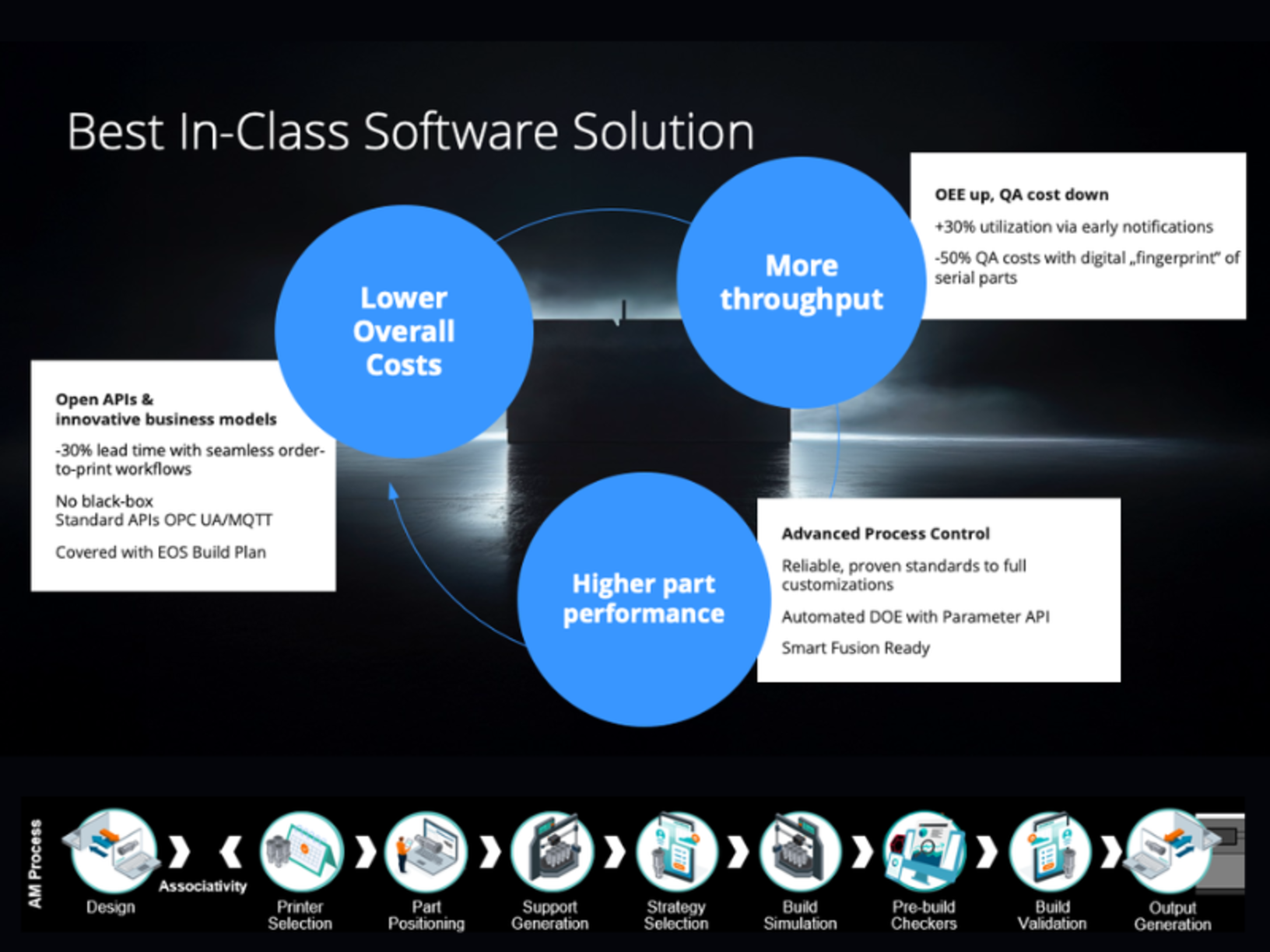
End-to-End Workflow for EOS M4 ONYX with Siemens NX
Together, EOS and Siemens bridge the gap between the digital and physical worlds by unifying design, validation, simulation, build preparation, printer integration and quality assurance into one continuous workflow.
Before EOS M4 ONYX reached the market, Siemens and EOS worked closely together to ensure that our users could move seamlessly from design to build preparation and into production within a fully connected workflow. The result is a truly open CAD-to-print process that gives engineers full control over their data, parameters and critical process decisions.
Here, the openness of the EOS ecosystem becomes a decisive advantage. Every interactive step in NX is also available for automation, enabling customers to automate individual tasks or even the complete end-to-end process chain. With open EOS APIs, real-time monitoring, automated parameter application, and seamless integration into quality assurance and reporting environments, every step remains part of a consistent digital thread. Process stability, repeatability and documentation are strengthened through continuous data flow, a key requirement for industrial production.
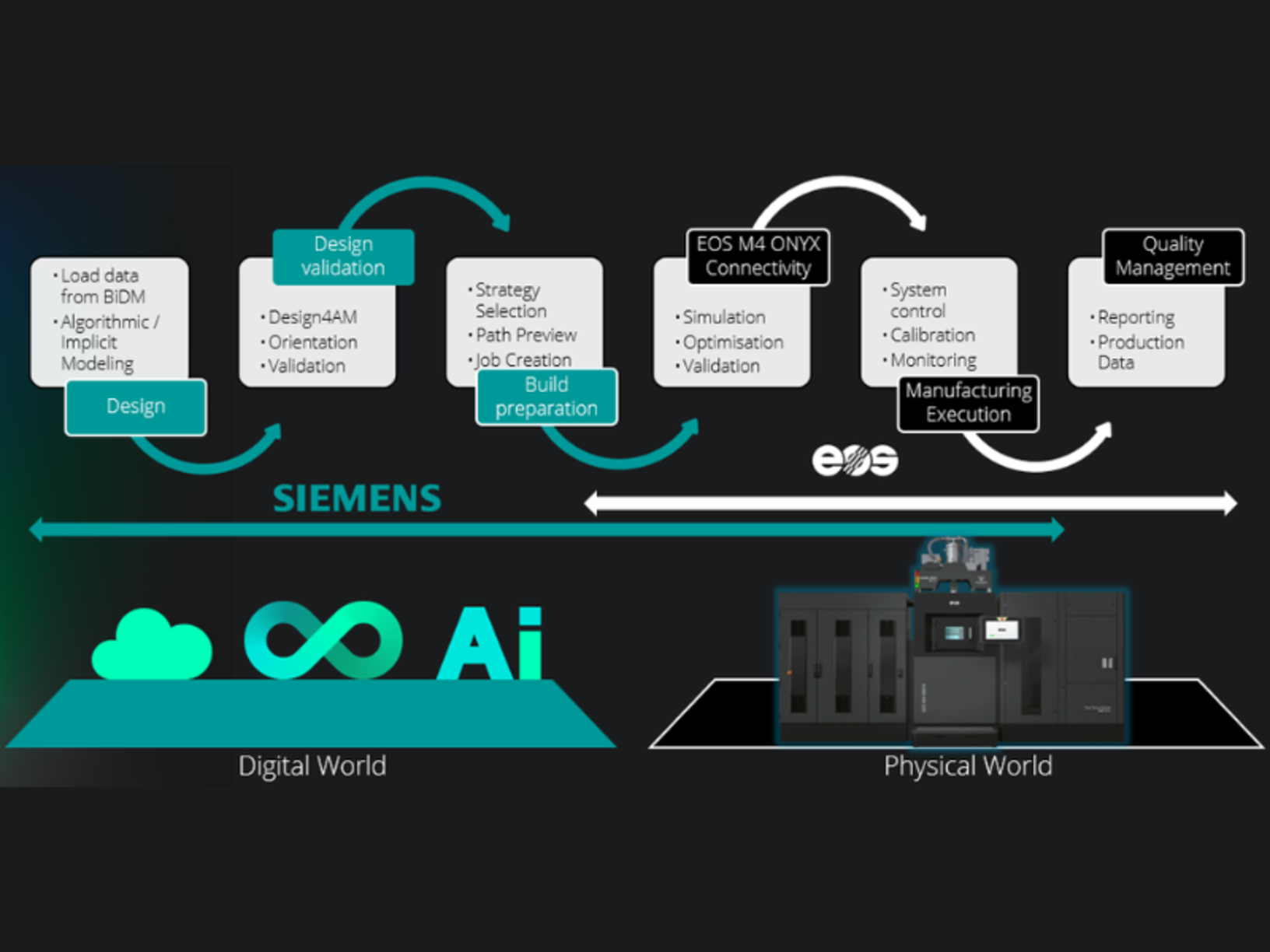
From Design to Quality: A Connected Digital Thread
In NX, validation tools provide an extensive set of quality checkers that allow engineers to evaluate whether a digital model is compatible with the physical constraints and process behavior of EOS M4 ONYX. These checks detect features that could lead to defects or post-processing challenges, strengthening process predictability.
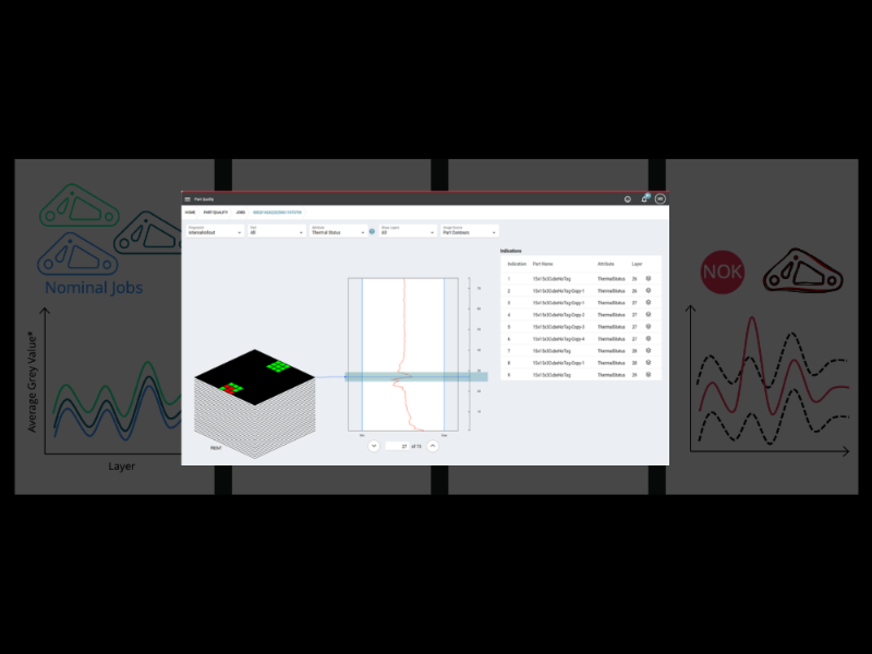
During production, EOS M4 ONYX captures a detailed, layer-by-layer digital twin of each build. Because EOS makes this data openly accessible, it can be integrated directly into customers’ existing workflows, dashboards, or analytics pipelines. This shifts quality assurance from reactive inspection to predictive, data-driven process control. This is an essential requirement for high-value serial production, regulated industries, and applications where full traceability is non-negotiable.

Industrial Use Cases Enabled by Openness
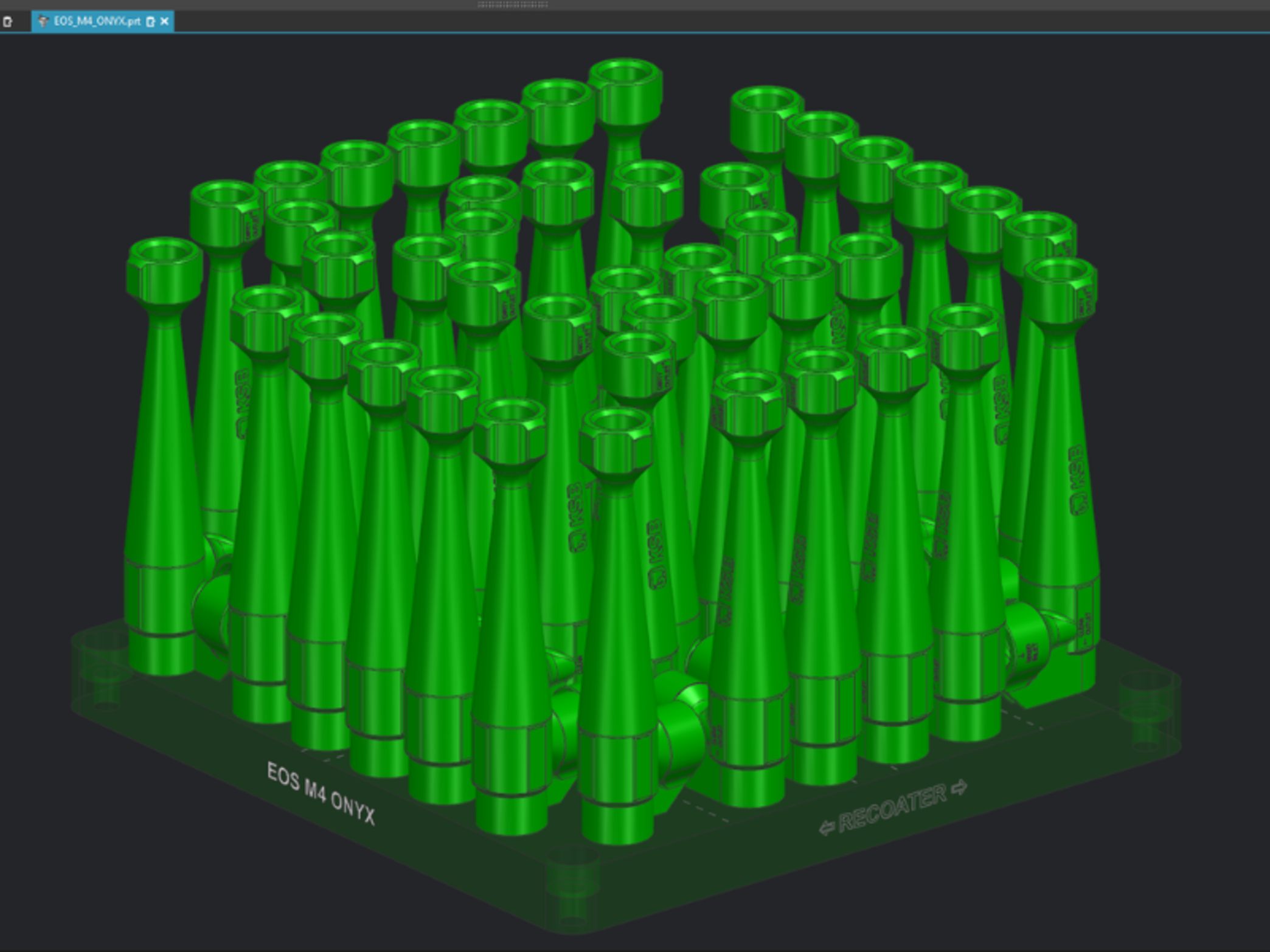
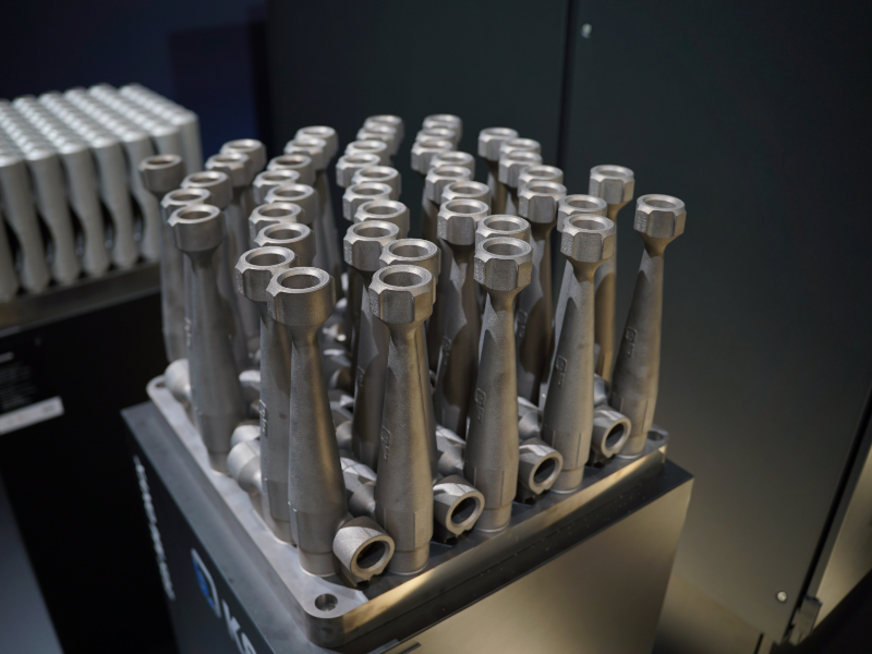
The value of an open Siemens–EOS workflow becomes especially clear in real-world production scenarios. One example is the cyclone separator from KSB, which served as the lead industrial showcase build during the EOS M4 ONYX system launch.
Within NX, KSB engineers leveraged advanced modeling techniques, optimized orientation strategies and build simulation while maintaining full associativity with the original design intent. Because the workflow remains open and connected, this validated design transitioned seamlessly into the EOS M4 ONYX build environment, without data loss or manual rework.
Conclusion
The integration between Siemens NX and EOS is not simply about connecting software to hardware. It reflects a shared commitment to enabling a digitally continuous and scalable environment for industrial additive manufacturing. By combining Siemens NX with the EOS M4 ONYX, customers gain a fully connected CAD-to-print workflow that delivers transparency and control across the entire additive manufacturing process chain.


