Understanding Metal 3D Printing Cost
Learn How to Reduce Cost per Part and Maximize ROI
25 August, 2026 | Reading time: 5 min
Metal 3D printing is transforming industries by enabling the creation of lightweight, high-performance metal parts, and it’s increasingly used across industrial applications. Understanding metal 3D printing costs is essential for engineers and manufacturers looking to manage budgets and improve return on investment. The cost of 3D printing metal parts varies widely, influenced by factors such as printer technology, material cost, build volume, and operational expenses.
The Importance of Metal 3D Printing Cost
While entry-level metal 3D printing solutions are available at relatively low cost, industrial systems typically require significantly higher investment. Manufacturers often require 3D printing systems that feature high-power lasers, robust safety systems, and advanced software to be suitable for the additive manufacturing (AM) of complex metal parts. Compared to conventional manufacturing, additive manufacturing eliminates the need for tooling and supports rapid prototyping and production.
Key Factors Driving the Initial Cost of Metal 3D Printers
A major contributor to the overall cost is the price of the machine itself. Industrial metal 3D printing systems based on technologies such as DMLS are designed for reliable, repeatable production and therefore require a higher level of investment in hardware, process control, and safety systems. Alternative entry-level solutions can lower initial investment but often come with limitations in build volume, material flexibility, and overall production capabilities. Factors influencing metal 3D printer cost include:
- Build volume: Larger build chambers allow for bigger or more 3D printed parts per cycle, but increase system cost.
- Laser count and power: Multi-laser systems boost throughput but raise investment cost.
- Automation and powder handling: Features like automatic sieving, inert gas recycling, and integrated software reduce manual effort but increase system complexity.
- Material compatibility: Supporting a wide range of materials (e.g. stainless steel, titanium, nickel alloys, copper, or other metal powders) requires advanced filtration and safety systems.
- Software and connectivity: Advanced monitoring, MES integration, and quality assurance tools add license fees.
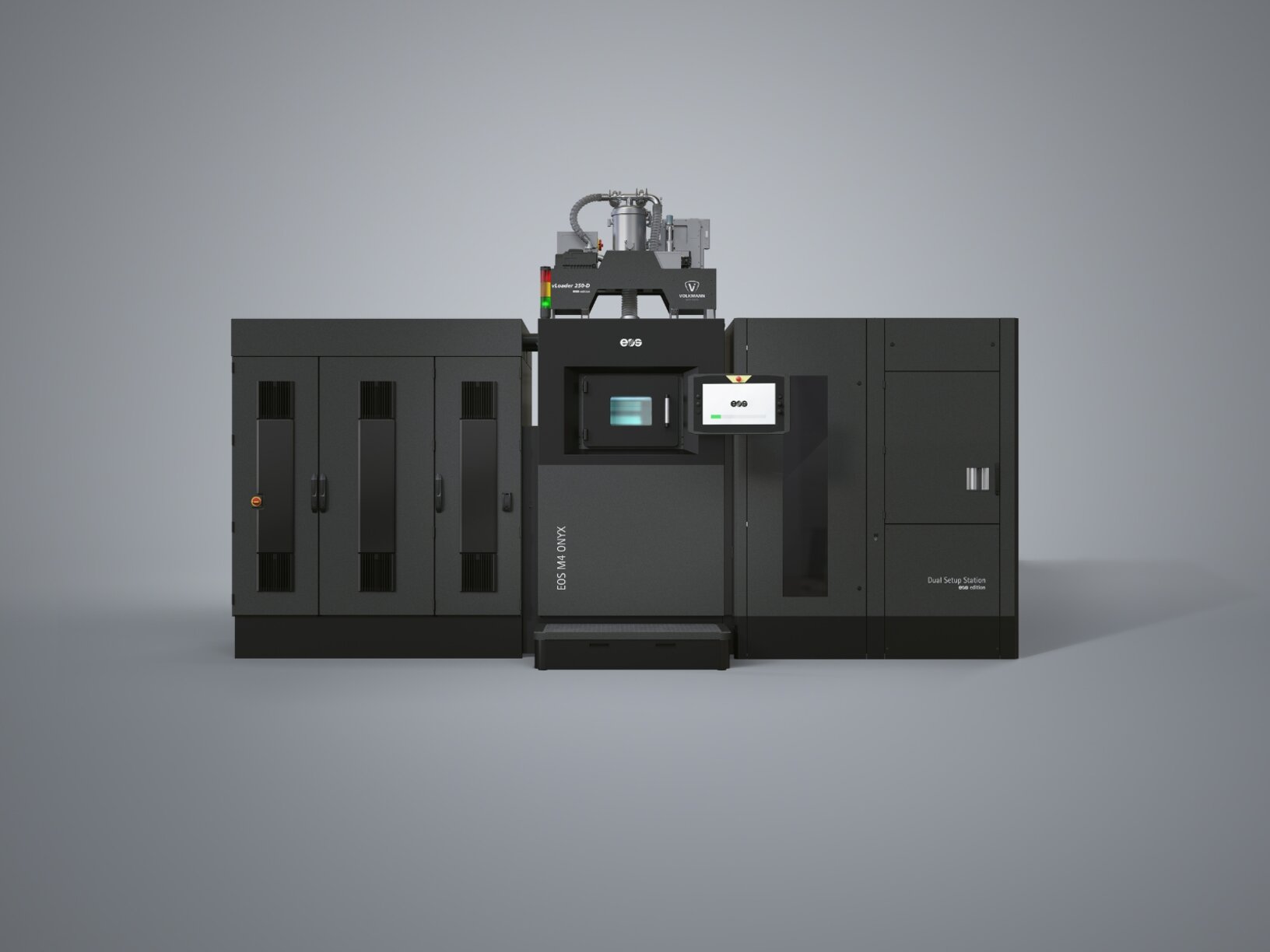
EOS offers a range of industrial metal 3D printers, from compact single-laser platforms to high-throughput models like the EOS M4 ONYX, which delivers 50% higher throughput and 30% lower part costs. When selecting a metal 3D printer, consider your application (prototyping vs. production), required metal materials, build volume, resolution, and operator skill level.
Running Costs and Operational Expenses
After the initial investment, ongoing costs become significant. The total cost per part (CPP) includes equipment ownership, material cost, labor, and operational expenses. Higher machine utilization helps distribute fixed costs across more parts, reducing CPP.
Material cost is a major driver. Stainless steel metal powder is the most economical, while titanium and nickel superalloys typically cost more due to complex atomization and stricter quality controls. Material selection, powder quality, particle size, and supplier reliability all affect the final part cost. Other operational expenses include:
- Inert gas: Argon or nitrogen is required to maintain controlled build environments.
- Energy consumption: Industrial systems require significant power, especially multi-laser machines.
- Maintenance: Regular replacement of filters, recoater parts, and optics is required.
- Software: Ongoing costs for design, simulation, and quality tools.
- Facility requirements: Ventilation, storage, and safety infrastructure.
EOS Cost & Carbon Calculator provides a transparent overview of CPP, including machines, materials, post-processing, consumables, and overhead. Engineers can simulate scenarios with up to 95% accuracy by importing build-parameter data.
Increasing machine uptime can further reduce costs. EOS’s Grenzebach Dual Setup Station increases productive time from 60% to 90% by enabling build-change operations, reducing downtime between builds.

How Design and Finishing Impact Overall Additive Manufacturing ROI
Design Complexity
Complex metal parts, such as lattice structures and internal channels, can reduce material cost and weight and enable higher performance. While these designs may require additional preparation and optimization, they often eliminate the need for multiple components and assembly steps.
Applying Design for Additive Manufacturing principles can make a big difference. These include consolidating assemblies, optimizing build volume, and maximizing build-plate density. These principles help minimize laser time, support generation, and powder consumption, reducing overall cost.
Post-Processing
Post-processing remains an important factor in the total cost:
- Support removal: Separating parts from the build plate and removing support structures.
- Heat treatment: Relieving internal stresses and stabilizing material properties.
- HIP (Hot Isostatic Pressing): Increasing material density and reducing internal porosity for critical applications.
- Machining: Achieving tight tolerances on critical features.
- Surface finishing and inspection: Improving surface quality and verifying part integrity for final use.
Furthermore, the EOS Additive Minds advisory team helps optimize finishing steps and streamline the 3D printing process.
Making Informed Decisions on Metal 3D Printing Investments
Metal 3D printing cost is influenced by a combination of system investment, materials, operations, design, and finishing. Compared to traditional manufacturing, it can be particularly competitive for complex parts or low- to mid-volume production, where tooling costs are avoided. To optimize additive manufacturing cost, organizations should:
- Quantify all fixed and variable inputs, including gas, energy, and software.
- Evaluate build orientations to reduce support volume and build time.
- Assess indirect benefits such as inventory reduction, faster certification, and on-demand spares.
Ready for a deeper dive? Contact EOS for a quote or consultation on metal 3D printing solutions, or explore how EOS metal 3D printers can meet your performance and budget objectives.