VOCUS Delivers Certified Aircraft Exhaust Component via Advanced Reverse Engineering and 3D Printing
VOCUS GmbH | Case Study
In aerospace manufacturing, unpredictable availability and quality inconsistencies in critical components can compromise both operational readiness and safety. Augsburg-based VOCUS GmbH, an innovative aerospace supplier specializing in reverse engineering and additive manufacturing (AM), was tasked with a high-stakes project: re-engineering and certifying a sliding piece for an aircraft exhaust system.
To realize a fully certifiable and repeatable additive manufacturing workflow, VOCUS worked in close collaboration with Materialise. Together, the partners established a seamless digital process chain, from design data preparation and build strategy to production traceability, forming the backbone for aerospace approval. Metal production was executed on an industrial EOS metal system, providing the process stability required for repeatable aerospace builds.
The original part - traditionally welded from aircraft-grade steel - suffered from dimensional variability, weld-induced stress zones, operational inefficiencies caused by manual welding and limited-service life. The mission was clear: develop a predictable, digitally controlled, and certifiable manufacturing process that would deliver improved performance while meeting EASA’s stringent Supplemental Type Certificate (STC) requirements.
Challenge
- Weld-induced distortions, heat-affected zones and dimensional scatter reduced consistency and repeatability.
- Stress concentrations at the weld led to shorter service life and more frequent replacements.
- Operational inefficiencies stemmed from handcrafted manufacturing steps, specialized fixtures and limited traceability.
- Conventional quality assurance lacked the digital transparency needed for aerospace certification.
Meeting certification and operational needs required digitally accurate reproduction, a more robust design, and full lifecycle traceability - all of which exceeded the limits of traditional manufacturing.
Solution
VOCUS adopted a multi-stage approach combining CT-based reverse engineering, digital optimization, AM fabrication process, rigorous testing and full aerospace certification.
In implementing this approach, Materialise supported VOCUS with its aerospace-proven software environment. The collaboration ensured reliable build preparation, standardized data handling and end-to-end documentation - critical elements for meeting certification expectations.
- Reverse engineering via CT scanning: Using high-resolution industrial computed tomography captured both internal and external geometries with high precision, ensuring an exact digital foundation for redesign.
- CAD reconstruction and optimization: Based on the CT data, engineers recreated the geometry in CATIA and implemented improvements only possible with AM, such as:
- Reduction of stress risers and elimination of weld-induced transition zones
- Optimized load radii
- Reinforcement of highly stressed areas
- Targeted weight reduction in non-critical regions
- Homogeneous, weld-free structure to withstand cyclic thermal and mechanical loads - Prototype validation in polymer: A polymer prototype was 3D-printed to verify dimensional accuracy and fit, ensuring CAD fidelity before committing to metal builds.
- Metal production using EOS NickelAlloy IN718 and PBF/LB-M: The final model was built on an EOS metal system using Materialise Magics for build preparation and EOS Build Processor for system integration. The stability and repeatability of the EOS platform were key to achieving consistent melt pool behavior and reliable build results. Six sliding pieces were produced per build along with material test coupons for ongoing verification.
- Post-processing and quality control: The post-processing workflow included stress-relief heat treatment, support removal, precision machining and ceramic bead blasting. In addition, VOCUS introduced a unique part signature (batch + serial number) to secure complete traceability throughout the component’s lifecycle. Together with Materialise, VOCUS established a streamlined digital traceability setup based on Streamics. This central data backbone connects machine parameters, material information, post-processing records and inspection results, creating a unified documentation structure ready for aerospace certification.
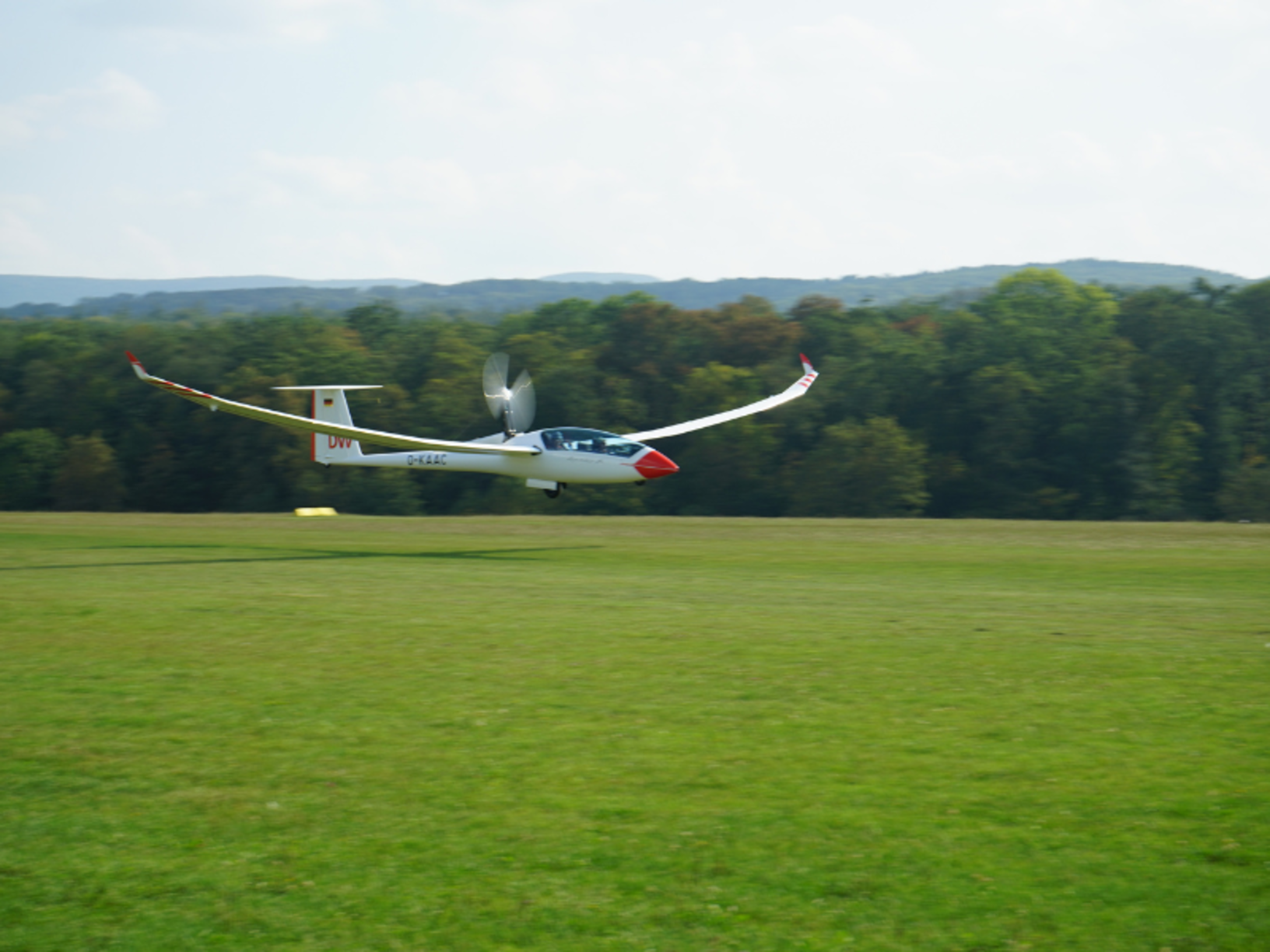
- Ground and flight testing: EASA mandated 10 hours of ground testing - VOCUS completed 20 hours across Binder Motorenbau and SOLO Aero Engines.The load cycles included: cold start, engine start, 5 minutes full load, 3 minutes idle and cooling and repeat. Flight testing was conducted on an Arcus aircraft by DreamWings, completing 35 hours without incidents. Today, the AM sliding pieces are in operational use in Germany, Switzerland and Australia.
- Certification and serial release: The entire production and documentation chain - reverse engineering, AM, post-processing, and QA - was approved as a part of an EASA Supplemental Type Certificate (STC). To the best of current knowledge, VOCUS is one of the few companies holding an EASA STC for an AM Metal part in Inconel and authorized to manufacture and supply it for operational aircraft use.
Made in Germany
A key factor in achieving certification was that the entire AM workflow - from reverse engineering and data preparation to production, post-processing, documentation, and quality assurance - could be executed fully in Germany. This consistent “Made in Germany” process chain ensured the transparency, process control, and documentation depth required for EASA conformity.

Results
Through this project, VOCUS achieved a certified, EN 9100/ISO 9001-compliant production process approved under EASA STC. Key outcomes include:
- Significantly improved dimensional accuracy and reproducibility
- Homogeneous, weld-free structure with superior behavior under cyclic loads
- Predictable and digitally controlled manufacturing process
- Reduced dependency on manual welding processes and specialized fixtures
- Extended service life - estimated at ~10x longer than the welded version
- Full cradle-to-grave traceability and protection against unauthorized or counterfeit parts
The combination of AM and digital workflows enabled VOCUS to deliver a safer, more durable, and more certifiable component than the conventionally manufactured counterpart. The robustness of the EOS platform contributed to high process repeatability and supported the certification effort with stable, predictable build conditions.
“Even small companies can implement cutting-edge manufacturing technologies like additive manufacturing - either by investing themselves or by working with the right partners, especially when supported by experienced technology partners providing scalable digital infrastructures.”
Stefan Gorkenant, Project Manager, VOCUS GmbH
In Action


Key Technical Data
- Material: EOS NickelAlloy IN718, selected for structural strength under high-temperature exhaust environments.
- Build platform capacity: Six components per run, plus dedicated test coupons to ensure consistent material quality.
- Post-processing: Stress-relief heat treatment, precision machining, ceramic bead blasting to achieve final tolerances and surface finish.
- Software: Materialise Magics for build preparation, EOS Build Processor for system integration, and Streamics for digital traceability.
- Certifications: ISO 9001, EN 9100, and EASA STC, confirming full compliance with aerospace manufacturing standards.

Broader Impact
The success of this project underscores a broader shift within aerospace manufacturing: additive manufacturing is no longer an exclusive domain of large OEMs with vast R&D budgets. Companies like VOCUS are showing that with the right mix of engineering expertise, digital workflow integration, and disciplined quality control, even small and mid-sized enterprises can achieve aerospace-grade results.
Through the collaboration with Materialise and the use of industrial‑grade EOS systems, VOCUS demonstrated how digitally supported process chains can accelerate this transition and make certification‑ready AM accessible to SMEs.
By leveraging accessible AM technology and industry-standard certification pathways, VOCUS not only delivered a critical exhaust component but also set a precedent for how smaller firms can compete at the highest level of manufacturing precision. This approach empowers regional suppliers to modernize legacy components, extend aircraft service life, and strengthen the resilience of supply chains — all while maintaining cost efficiency and design flexibility.
Ultimately, the sliding piece project serves as a case study in how democratized access to advanced engineering tools and additive manufacturing can open new possibilities for innovation across the aerospace sector. It demonstrates that excellence in aviation manufacturing is defined not by company size, but by vision, precision, and commitment to continuous improvement.
“Seeing VOCUS achieve flight certified serial production shows how powerful a structured digital workflow can be. Together, we proved that certification is achievable when engineering expertise and software driven quality assurance go hand in hand.”
Tim Domagala, R&D Engineer, Materialise
About the Company
VOCUS GmbH
VOCUS acts as a development and manufacturing partner for additive manufacturing, supporting customers from part optimization and production through testing, evaluation and guidance through the EASA certification process (e.g. STC projects). The focus is on the safe, efficient and compliant application of AM technologies in aerospace and industrial environments.
Find out more: https://vocus3.de/en/
Get Inspired
3D Printing for Aviation
Industry | Aviation

Success Stories Aviation
SUCCESS STOries | AVIATION
EOS NickelAlloy IN718
Metal Material

