
Additive Manufacturing as a Growth Driver in Medical Technology
31 MARCH, 2026 | Reading time: 4 min
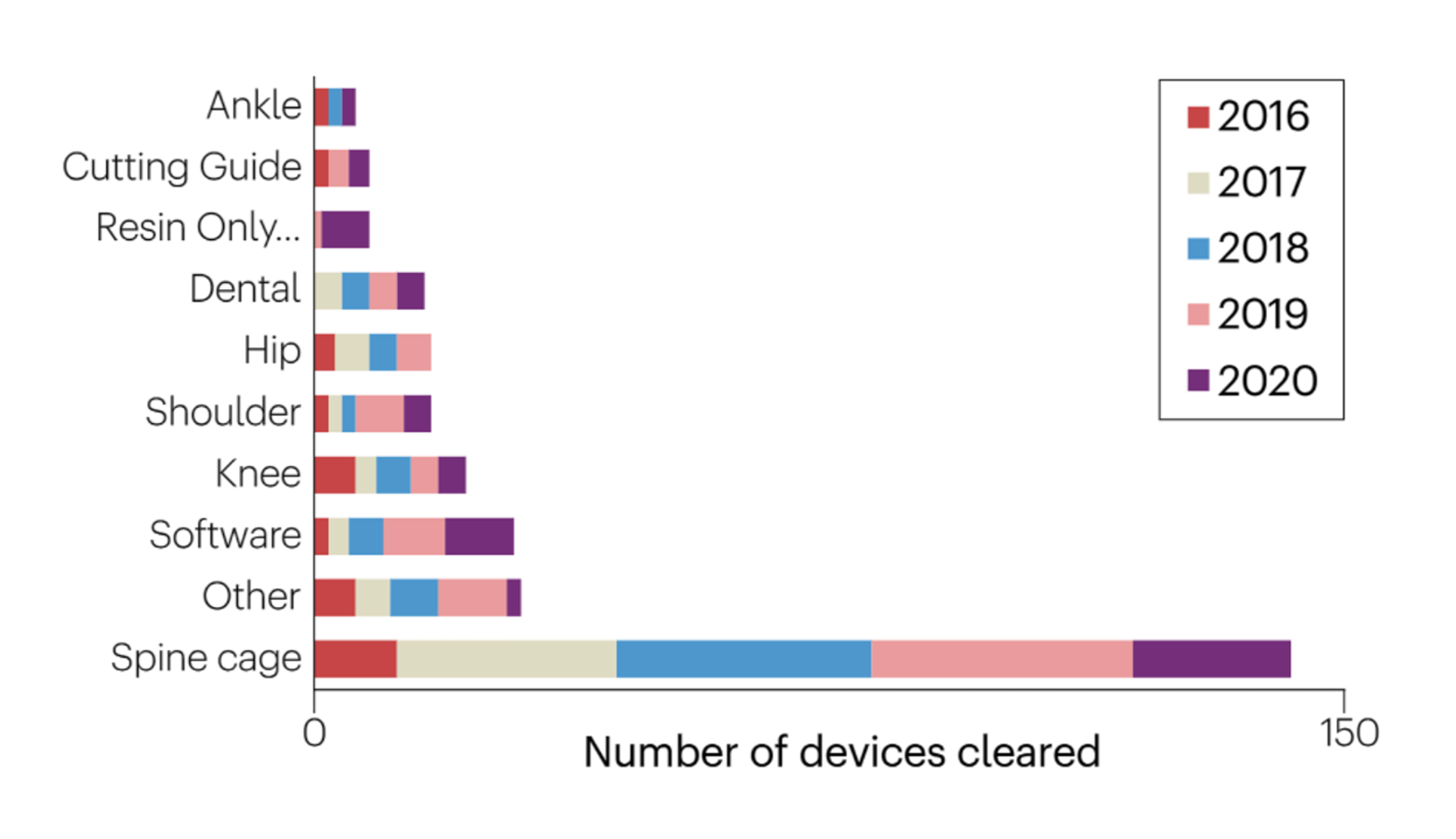
Additive manufacturing (AM) has evolved from a niche tool into a core capability for innovation in medical technology. Especially in orthopedics, AM is transforming how implants and surgical instruments are designed, produced, and delivered. It empowers OEMs to respond to clinical needs faster, create highly customized products, and unlock new therapy approaches that improve patient outcomes. And the medical market for orthopedic implants will continue to grow. The number of people aged 65 years or older worldwide is projected to more than double, rising from 761 million in 2021 to 1.6 billion in 2050. Adding to this also access to healthcare will increase in emerging countries. This growing demand can already be seen in the amount of AM medical devices approved by the FDA.
“If you don’t capitalize on AM’s potential in orthopedics, you’re behind the competition. But just having additive isn’t enough anymore. Companies must understand how to leverage the technology to unlock its true advantages.”.
Davy Orye, Head of Additive Minds Consulting, EOS
New AM medical devices are cleared every year by the FDA and are growing rapidly. Source: Fogarasi et al 2023 , “A Survey of additive manufacturing trends for FDA-cleared medical devices”.
Freedom to Innovate Without Limits
Unlike traditional processes, AM requires no molds or tooling. From a single digital file, manufacturers can produce a wide range of implants and instruments - from hip cups and tibial trays to highly specialized patient-specific implants all within the same machine.
This design freedom also enables functional integration: complex geometries, porous lattice structures, and tailored surface textures that were previously impossible to achieve. These features enhance osseointegration, support biomechanical reconstruction, and accelerate healing processes.
With over 30 years of industrial 3D printing experience, EOS combines deep expertise in certifications, biocompatible materials, and validated workflows to help customers bring these innovations to market safely and efficiently.
Differentiation Through Customization and Personalization
AM allows implants and instruments to be designed directly from patient-specific anatomical data, resulting in faster delivery, more precise fit, and improved recovery.
Hospitals, patients, and surgeons all benefit: shorter operating times, reduced sterilization and storage costs, and more predictable outcomes.

Scaling Across the Product Lifecycle
From first prototypes to late-stage production, AM provides unmatched flexibility. Small-batch runs, niche implant sizes, or end-of-life product extensions can be produced without costly retooling.
“Additive allows companies to scale more fluidly across the product lifecycle - whether they’re in early development, high-volume production, or producing the smallest and largest sizes often needed in low quantities.”.
Anna Sailor, Senior Additive Manufacturing Consultant, EOS
EOS supports this scalability by building repeatable, validated production environments. Studies with EOS Titanium Ti64ELI on multiple EOS M 290 systems have demonstrated Six Sigma-level repeatability across machines - critical for medical certification and consistent patient outcomes.
One of our leading customers in medical implant manufacturing recently transferred parts of its serial production from the M 290 single field to the M 290 dual. Due to the same system platform this resulted in a minor revalidation effort but increased productivity significantly.
Beyond Cost and Speed: Solving Unmet Clinical Needs
AM is increasingly applied in complex surgical scenarios, where highly specific implants can make a decisive difference. Production timelines drop from weeks to days, helping patients receive treatment without delay.
Surface engineering enables optimized bone ingrowth and long-term implant stability. Applications include spinal cages, hip cups, cranial implants, and oral/maxillofacial implants. Improvements in print speed, machine costs, and material efficiency now make AM competitive even for large, traditional implants.
Partnering for the Future of Patient Care
What sets leaders apart today is not the decision to use AM, but how they use it. Companies that treat additive manufacturing as a core innovation platform rather than a niche capability will define the next era of orthopedic care.
“The market has moved beyond early adopters. Additive is no longer the differentiator. It’s how you use it that sets you apart.”
Davy Orye, Head of Additive Minds Consulting, EOS
With a complete portfolio of metal and polymer AM systems, consulting expertise, and training services, EOS offers customers a one-stop solution for developing implants, instruments, and medical devices. From concept to certified serial production, EOS is the trusted partner helping OEMs transform medical technology - for better patient outcomes, faster innovation, and sustainable business growth.


