
Beyond Earth: How Additive Manufacturing Is Enabling the Next Era of Space Exploration
AM as a Strategic Enabler – and Why Additive Manufacturing Is a Strong Partner for Space Missions
09 APRIL, 2026 | Reading time: 5 min
A Space Industry in Transition – and AM as Key Technology
The global space sector is evolving at an unprecedented speed. New launch systems, ambitious exploration programs, reusable rockets, rapid development cycles, startups with disruptive business models, and the growing influence of private players are reshaping the ecosystem. With these developments, the demands on components rise: As space applications push for higher performance while timelines tighten and volumes stay relatively low, speed becomes the decisive factor. AM addresses this by enabling fast production of complex parts that would be difficult to realize conventionally, while also reducing manufacturing complexity through part consolidation, laying the foundation for efficient scaling as demand grows.
By allowing design changes to be implemented rapidly and prototypes to be produced in short timeframes, additive manufacturing directly supports the accelerated pace of innovation in the modern space sector. This ability to iterate quickly lays the foundation for the next step: using AM not only to accelerate development but also to fundamentally enhance the performance and efficiency of critical components.
AM in Extreme Environments: 225 Million Kilometers Away - and Operating Reliably
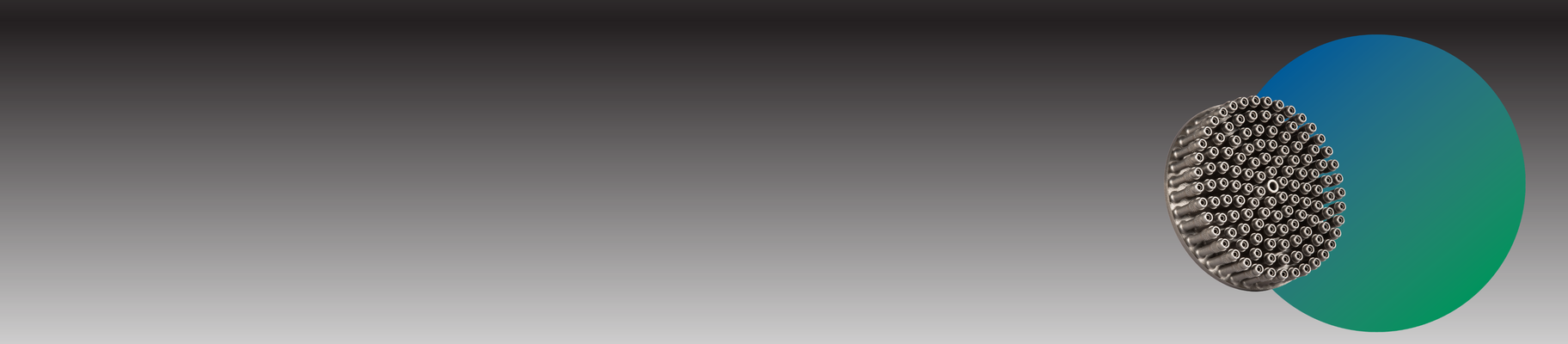
A powerful example of the maturity of additive manufacturing is the use of AM components in the MOXIE experiment aboard NASA’s Perseverance rover. The additively manufactured heat exchangers in MOXIE operate reliably under harsh Martian conditions - an environment defined by extreme temperature shifts and a thin atmosphere. The heat exchangers were produced at NASA’s Jet Propulsion Laboratory (JPL) using an EOS M 290 metal additive manufacturing system.
The fact that these additively manufactured components operate flawlessly more than 225 million kilometers from Earth underscores more than mere technical success. Their use in such a mission reflects the rigorous qualification, validation, and confidence required for flightready hardware in space exploration. It highlights the level of industrial maturity and reliability that metal AM parts have achieved for applications in some of the most demanding environments imaginable.
Key Applications of AM in the Space Sector
Additive manufacturing has become essential across core space technologies. Major applications include:
- Thrust chambers
- Injector heads
- Turbo pump components
- Valve components
- Structural satellite parts
- Waveguides
- Propellant tanks
These components benefit from optimized geometries, advanced cooling concepts, and the ability to integrate multiple functions into a single part.
More Performance and Lower Costs - The Value of AM
In space applications, one of the primary benefits of additive manufacturing is not weight reduction - it is performance. AM enables highly optimized geometries that significantly improve cooling efficiency and thereby enhance the performance of thrust chambers and injector components. Technology also offers extensive design freedom, allowing engineers to integrate functions and pursue entirely new design principles that are difficult or impossible to achieve with traditional methods. In addition, additive processes accelerate development cycles, enabling quick design adjustments, rapid prototyping, and fast testing - a critical advantage in programs with short iteration cycles and intense innovation pressure.
Reducing manufacturing complexity is the key value that additive manufacturing brings to space applications. By enabling part consolidation, complex assemblies that once required multiple components can be produced as a single unit. This streamlines production, shortens lead times, lowers costs, and supports the efficient scaling of industrial manufacturing, while also minimizing assembly effort in intricate rocket and satellite structures.
A strong example is the RS-25 engine, originally flown on the Space Shuttle and now powering NASA’s Space Launch System (SLS) for Artemis missions. The latest version incorporates 30 additively manufactured components, including parts of the combustion chamber, nozzle, and powerhead. This demonstrates that AM is not limited to new designs, but can be applied to proven, heritage systems to make production more efficient. By reducing manufacturing complexity, industrial 3D printing cut the production cycle from three years to 11 months and eliminated 97% of welds.
Customized and Large-Scale AM Systems
Large space components require large-scale AM systems. AMCM addresses this with tailored platforms such as the M8K, offering a build volume of 820 × 820 × 1,600 mm, enabling the production of major components such as thrust chambers. The development of the M8K was supported by a national grant aimed at strengthening the competitiveness of the Ariane 6 program, underlining the strategic role of additive manufacturing in Europe’s space industry.

The Material Base for Space: Aluminum, Titanium, Nickel, Copper, Niobium
Space industry requires materials with highly specialized properties: high temperature resistance, heat conductivity, low mass, and exceptional strength. To meet these demanding requirements, a broad portfolio of alloys is used - each tailored to specific performance needs in propulsion systems, thermal management, or structural components.
Structural components
- Aluminum alloys: AlSi10Mg, F357
- High-strength aluminum: Al5X1
- Titanium alloys: Ti64 Grade 23
Electrical conductivity
- Low-alloyed aluminum: Al8X1
Thermal management
- Copper alloys: CuCrZr, GRCop42
High-temperature
This material diversity is essential for meeting the demanding requirements of rocket propulsion and satellite systems.

New AM Capabilities Enable More Complex Space Applications
In space applications, where material performance, process stability, and qualification requirements are exceptionally high, precise control over the manufacturing process becomes critical. This is why EOS developed Smart Fusion, a closed-loop process control innovation for metal additive manufacturing that actively manages thermal conditions during the build process to reduce support structures, improve part quality, and increase productivity.
The impact of Smart Fusion becomes evident when looking at components with local thermal bottlenecks. In a standard exposure strategy, heat can accumulate in these areas during the build process, leading to overheating and resulting in microstructural variations. With Smart Fusion, thermal conditions are actively controlled layer by layer, preventing excessive heat buildup. This results in a more uniform microstructure across the part, even in critical regions, and ensures consistent material properties throughout.

Conclusion: Additive Manufacturing - A Key to the Next Generation of Space Missions
The space sector is advancing faster than ever - and AM plays a critical role in this transformation. Whether through improved cooling efficiency, accelerated development cycles, cost-effective small batch production, or the realization of complex geometries, additive manufacturing has become an indispensable technology.
With innovations such as Smart Fusion, large-format systems like the AMCM M8K, and extensive experience in demanding space programs, EOS contributes significantly to enabling the next era of space exploration.
Author: Michael Wohlfart, Team Manager Additive Minds Business Development & Academy


