
Maximizing Process Efficiency in Industrial Additive Manufacturing
30 JUNE, 2026 | Reading time: 6 min
In the medical, energy and aerospace sectors, the transition from prototyping to serial production requires additive manufacturing (AM) systems that deliver more than just geometric complexity. Success in these industries depends on total process efficiency, where hardware, software, and material science converge to maximize throughput and minimize waste.
Powder bed fusion (PBF) technology has reached a maturity level where optimizations within the process drive significant industrial gains. Beyond simple energy consumption metrics, modern PBF systems focus on holistic efficiency, encompassing build speed, material utilization, and post-processing requirements. By integrating advanced beam shaping and closed-loop process controls, manufacturers can now achieve the reliability and scale necessary for high-volume production.
Understanding Efficiency in Modern 3D Printing Systems
Manufacturing efficiency in AM goes beyond the energy consumption of the systems. Many engineers, such as those in the automotive and aerospace industries, employ a concerted focus on automation, machine learning, closed-loop feedback, and predictive maintenance to hit customers’ cost and uptime targets.
Digital workflows are equally important. For example, the EOS System Suite aggregates real-time machine data for quality assurance and production planning, delivering a 30% reduction in order-to-print lead time by giving engineers full transparency and control over each job. But there are other key innovations that make the 3D printing process more efficient, too.
Enhancing Productivity Through Next-Generation Beam Shaping
One of the most significant leaps in metal PBF efficiency comes from next-generation beam-shaping technology. By dynamically adjusting the laser profile, these systems can increase productivity by 50% to 100% depending on the specific geometry and material. This advancement also reduces process by-products, such as condensates and oversize material, significantly, leading to a cleaner build environment and higher material recycling rates.
Furthermore, shorter build times directly correlate with reduced operational costs. Faster cycles lower the total electricity consumption per part and significantly decrease the volume of inert gas required throughout the build. These efficiencies allow engineers to accelerate project timelines while simultaneously reducing the carbon footprint of individual components.
Key Machine-Level Innovations That Boost Efficiency
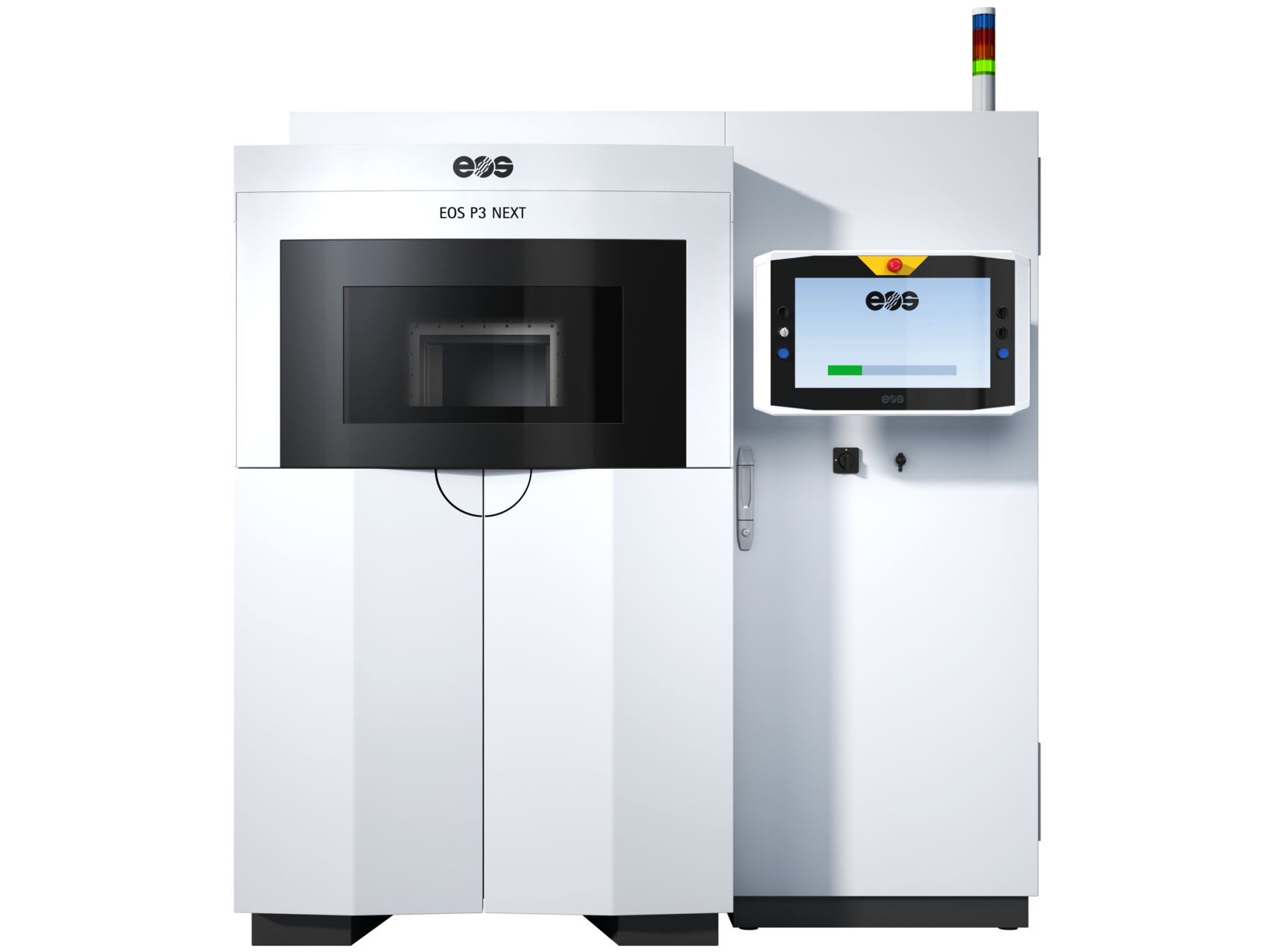
Faster cycle times are integral to any productivity gain, and hardware advancements deliver them. For example, by refining thermal management and scan strategies, the EOS P3 NEXT offers 33% faster preheating, a 36% quicker build process, and 90 % shorter cooldowns. The result is much less energy lost to non-productive build times. Comparative benchmarking underscores just how far the technology has come. The EOS P3 NEXT outpaces its P 396 predecessor in speed but also enters an energy-saving idle mode that shuts off nitrogen flow, compressed air, and cooling when the process chamber is cold. This reduces non-productive consumption.
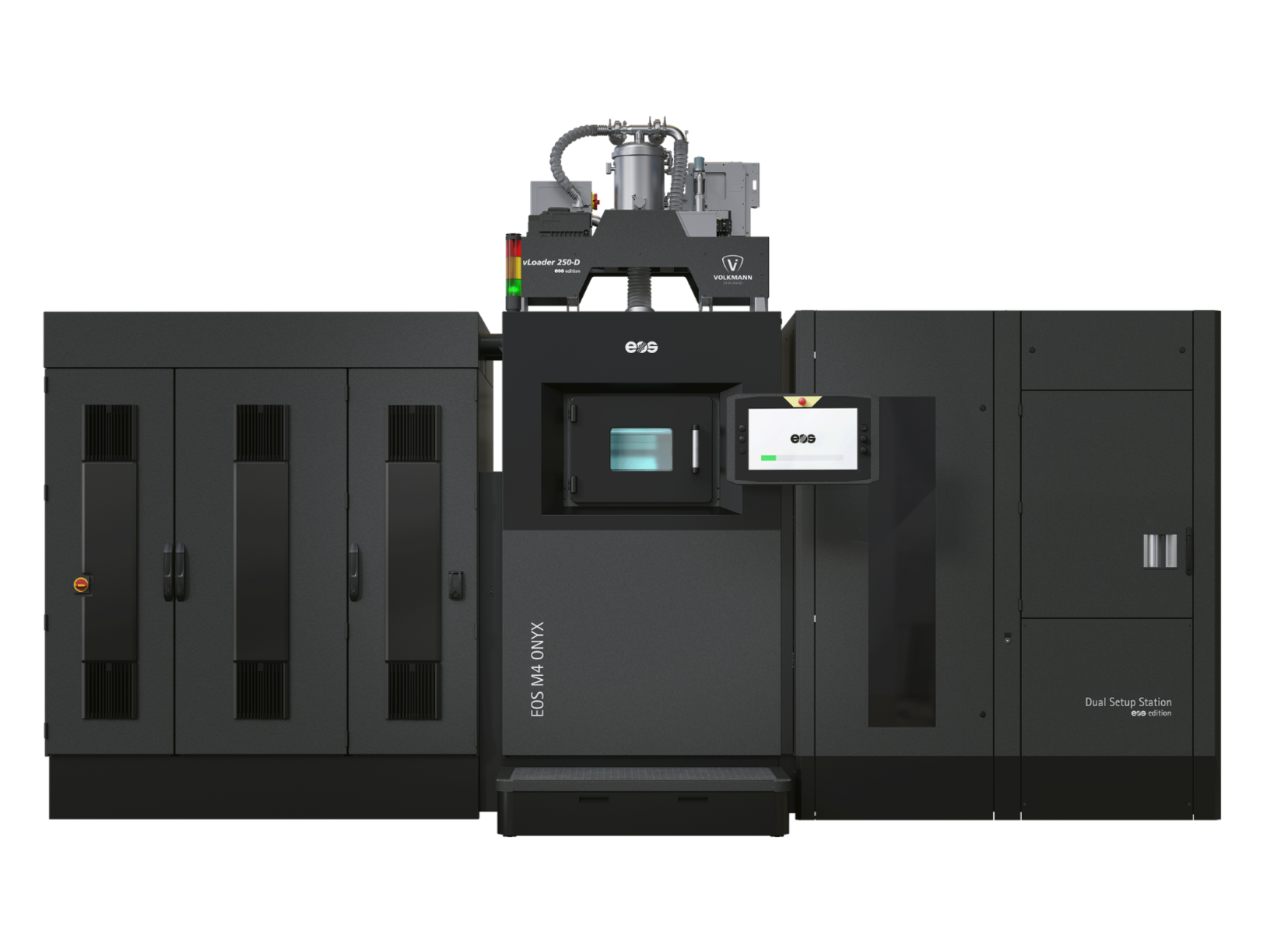
On the metal side, the EOS M4 ONYX scales that philosophy with power and smarter controls. Six 400 W lasers drive 50% higher throughput and trim part costs by roughly 30%, while integrated error-detection cuts quality-assurance expenses in half. This is within a system architecture engineered for up to 97% availability and rapid 30-minute changeovers. Meanwhile, the EOS M4 ONYX pairs the additional lasers with process-stability upgrades. The result is shorter build times, resulting in reduced inert-gas use and markedly lower part carbon footprints compared to its predecessors.
Beyond commercial releases, EU-backed research has logged over 600% productivity gains through AI-driven beam-shaping and multispectral imaging. This provides a glimpse of where tomorrow’s hardware roadmap is headed.
Thermal Management and the Shift to Support-Free Printing
Dimensional accuracy and thermal stability remain critical challenges in metal AM, particularly for high-stress applications in the energy and aerospace sector. EOS Smart Fusion addresses these issues through an intelligent, closed-loop process control that monitors and adjusts heat management in real-time. This technology ensures that every layer is fused with optimal thermal consistency, significantly reducing the risk of build failures or structural defects.
The impact of improved heat management extends to the design phase, particularly through the reduction of support structures. For materials like titanium, nickel alloys, and steels, SmartFusion can eliminate up to 80% of necessary supports. This reduction saves up to 20% of build time and a significant amount of raw material, while also minimizing the labor-intensive post-processing steps typically required for complex metal parts.
Strategic Gains
When hardware and software innovations work in tandem, the cumulative effect on a manufacturing operation is transformative. Higher productivity and lower material waste contribute to a more competitive cost per part, making AM a viable alternative to traditional casting or machining for complex assemblies. Simultaneously, increased system availability and reduced downtime contribute to a higher overall equipment effectiveness across the production floor.
The move toward support-free printing and optimized beam profiles represents the future of industrialized 3D printing. These technologies empower engineers to push the boundaries of part performance without sacrificing economic feasibility. As the industry continues to evolve, the focus remains clear: delivering the highest quality components through the most efficient process possible.
Efficiency is also the most direct path toward sustainability in additive manufacturing. By minimizing energy consumption, reducing material usage, and optimizing resource allocation, manufacturers can significantly lower the environmental footprint of each part produced. In this way, every gain in process efficiency translates not only into economic value but also into a measurable reduction in environmental impact, reinforcing AM’s role as a responsible and future-ready production technology.
Unlocking Your Efficiency Potential With EOS: Take the Next Step
When you pair advanced hardware with data-driven processes, efficiency leaps from aspiration to measurable reality. Whether you’re looking to cut lead times by weeks, reclaim materials that once went to waste, or eliminate the number of necessary supports, the latest generation of our systems provides a proven pathway. From the EOS P3 NEXT’s accelerated polymer cycles to the EOS M4 ONYX’s multi-laser throughput, the tools you need to transform production are ready today.
Efficiency isn’t a destination — it’s a continuous journey of iteration, optimization, and innovation. Contact EOS to learn how our 3D printing solutions can improve your manufacturing efficiency and keep your programs ahead of the curve.


